


THE FILTER THAT CHANGED LABORATORY DESIGN
We work with engineering and architecture firms, lab designers, lab casework providers, project managers, and other stakeholders building safer, lower-cost, lower-waste, flexible labs. Neutrodine®Unisorb technology captures solvents, acids, and bases simultaneously. Over 700 chemicals, in fact. Conventional activated carbon can’t do that. The most advanced molecular filtration ever built for fume hoods. Available for your project.


700+ validated chemicals

Handles acids, bases & solvents together

Up to 48-month filter life

AFNOR NF X 15-211 certified

<1% TLV at exhaust

96% energy savings vs. ducted
Get more information in 1 business day
Complete this request and your dedicated rep will get back to you within 1 day day to discuss GreenFumeHood®3 filtration technology for your project.
Trusted by Labs From The Basics
To The Bleeding Edge Worldwide


From Harvard to Pfizer. From Los Alamos National Laboratory to Google. GreenFumeHood®3 technology protects people in over 500 installations across research universities, pharmaceutical companies, government laboratories, and Fortune 500 R&D facilities.
Keep Your Project Under Budget
Like These Labs
Long term projected savings, lowered initial capital costs, LEED certifications, and sustainability goals met. Find a project that
reflects yours below and see what they achieved with GFH3.

Wellesley College
Wellesley, MA
Wellesley’s science center renovation faced a challenge common to historic campuses: how do you add modern laboratory capability to buildings that weren’t designed for it? The answer was GreenFumeHood®3 technology.
| Key outcomes | |
|---|---|
| 20-year projected savings | $4 million + net present value |
| Make-up air eliminated | 25,000+ CFM |
| Sustainability impact | Supports carbon neutrality goal by 2040 |
| Swing space advantage | Filtered hoods enabled temporary lab setups during phased construction |


Project type
Renovation, new construction, swing space
Scope
213,000 square feet
GFH3 units
39 filtered fume hoods
Architect
Skidmore, Owings & Merrill
Engineer
BR+A Consulting Engineers

University of Rochester
Rochester, NY
When the University of Rochester renovated its organic chemistry teaching lab, the numbers made the decision straightforward. GreenFumeHood®3 technology delivered immediate operational savings and qualified for state energy incentives.
| Key outcomes | |
|---|---|
| Annual operating savings | $136,100/year |
| NYSERDA rebate | $36,000 |
| Electricity savings | 32,727 kWh/year |
| Fuel savings | 8,233 therms/year |


Project type
Renovation (Organic Chemistry Lab)
Scope
2,400 square feet
GFH3 units
13 filtered fume hoods
Architect
In-house
Engineer
DGA Builders

Marywood University
Scranton, PA
Marywood’s existing building had low floor-to-floor heights that made traditional ducted fume hoods impractical. GreenFumeHood®3 technology solved the architectural constraint while reducing HVAC load on the aging building systems.
| Key outcomes | |
|---|---|
| HVAC load reduction | 25-30% on existing building system |
| Annual energy savings | ~100,000 kWh and $12,000 |
| Architectural benefit | Accommodated low floor-to-floor height |
| Repeat investment | Success of 2012 project led to 2019 expansion |


Project type
Gut renovation (Organic Chemistry Lab 2012, General Chemistry Lab 2019)
Scope
3,700 square feet combined
GFH3 units
18 filtered fume hoods (8 in 2012, 10 in 2019)
Architect
Ellenzweig
Engineer
MEP Engineering
Confidential R&D Laboratory
Akron, OH
This major R&D facility integrated GreenFumeHood®3 technology as part of a comprehensive sustainability strategy. The filtered fume hoods contributed to the building’s LEED Gold certification while delivering significant operational cost savings.
| Key outcomes | |
|---|---|
| LEED certification | Gold |
| 10-year net operational savings | $385,000 |
| Sustainability contribution | Reduced building energy footprint |


Project type
New construction
Scope
265,000 square feet
GFH3 units
11 filtered fume hoods
Architect
SoL Harris/Day

Lafayette College
Easton, PA
Lafayette’s Rockwell Integrated Science Center set out to achieve the highest levels of sustainable design. GreenFumeHood®3 technology was part of the strategy that earned the building both LEED Platinum certification and recognition as one of the AIA Committee on the Environment’s Top 10 projects.
| Key outcomes | |
|---|---|
| LEED certification | Platinum |
| Recognition | AIA COTE Top 10 2021 |
| Energy reduction | 73% vs. 2030 baseline |


Project type
New construction (Rockwell Integrated Science Center – Biology and Environmental Science Labs)
Scope
103,000 GSF
GFH3 units
11 filtered fume hoods
Architect
Payette
Engineer
BR+A Engineers

Framingham State University
Framingham, MA
Framingham State’s new science building used GreenFumeHood®3 technology at scale. With 49 filtered fume hoods, the project achieved substantial reductions in both mechanical systems sizing and ongoing operational costs.
| Key outcomes | |
|---|---|
| Mechanical systems reduction | 25% smaller |
| Net CapEx savings | $330,000 |
| Annual net OpEx savings | $24,500 |


Project type
New construction (Organic, Inorganic, General & Physical Labs)
Scope
68,000 GSF
GFH3 units
49 filtered fume hoods
Architect
Ellenzweig
Engineer
BR+A Consulting Engineers

Butler University
Indianapolis, IN
Butler University’s chemistry department renovation demonstrated what happens when filtered fume hood technology removes infrastructure constraints. The project delivered faster timelines, lower costs, and an unexpected benefit: a significant increase in student enrollment.
| Key outcomes | |
|---|---|
| Annual operating savings | $50,000+ |
| Net construction savings | $66,000 (10% reduction) |
| Timeline reduction | 3 months (27% faster) |
| Student enrollment increase | 42% in chemistry program |


Project type
Gut renovation (4 Chemistry Labs)
Scope
14,500 square feet
GFH3 units
30 filtered fume hoods + 12 Captair ductless hoods + 1 HALO system
Architect
BSA LifeStructures

Bristol Community College
Fall River, MA
Bristol Community College’s new science building achieved positive net energy, generating more than it consumes. GreenFumeHood®3 technology was essential to hitting these targets in a building that includes working chemistry laboratories.
| Key outcomes | |
|---|---|
| Energy performance | -13 EUI (Positive Net Energy) |
| ZNE certification | Certified by New Buildings Institute |
| LEED certification | Platinum |
| Recognition | AIA COTE Top 10 |


Project type
New construction
Scope
50,600 GSF
GFH3 units
13 filtered fume hoods
Architect
Sasaki Associates
Engineer
BR+A Consulting Engineers
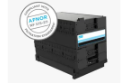
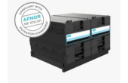
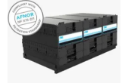
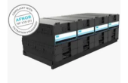
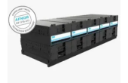
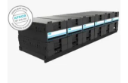
Erlab’s GreenFumeHood® 3 range
GreenFumeHood®3 integration technology packs. Adjustable to the width of any enclosure spec in your project.
|
|
|
|
|
|
|
|---|---|---|---|---|---|---|
| Model |
|
|
|
|
|
|
| Enclosure width (feet) | 3 | 4 | 5 | 6 | 8 | 10 |
| Treated air flow (CFM) | 129 | 259 | 388 | 518 | 645 | 774 |
| Learn More | Learn More | Learn More | Learn More | Learn More | Learn More |


The Technology Behind GreenFumeHood® 3
That Makes Your Facility Safer & Lowers
Operating Costs
Neutrodine®Unisorb Is A Different Kind of Carbon
Conventional activated carbon filters work well for organic solvents. They struggle with acids. They fail with bases. That’s why traditional filtered fume hoods required different carbon types for different chemical families or weren’t appropriate for mixed chemistry at all.
Neutrodine®Unisorb changed that.
We spent half a decade developing a proprietary filtration formulation that handles solvents, acids, and bases simultaneously with a single filter. No carbon blending. No heavy metal impregnation. Just a fundamentally different approach to molecular capture that outperforms conventional activated carbon across the board.
| Chemical class | Neutrodine®Unisorb improvement vs. conventional carbon |
|---|---|
| Cyclohexane | +50% retention capacity |
| Acetone | +50% retention capacity |
| Ethanol | +280% retention capacity |
| HCl | +60% retention capacity |
| Ammonia | +50% retention capacity |
| Isopropanol | +90% retention capacity |
The improvements are most dramatic for molecules that conventional carbon struggles with. Polar VOCs with low molar mass and low boiling points. These are exactly the chemicals that caused breakthrough problems in earlier generations of filtered fume hoods.
Anti-pollutant release filter system (US Patent 7,563,301) | Neutrodine®Unisorb filter (US Patent Application 12/465,434)
How The GFH3 Revolving® Filter
System Makes Your Project Safer
GreenFumeHood®3 uses a two-level filtration architecture

How it works
When the main filter approaches saturation, molecules are directed toward the safety filter. The safety filter then becomes the new main filter, and a fresh filter is installed in the safety position. This revolving approach optimizes filter life while maintaining continuous protection.
What this means for your project
Users replace one filter at a time, not all filters at once. The logistical burden of operating these ductless fume hoods is extremely low. Filter costs are spread across the lifecycle rather than hitting in a single purchase. Predictability and safety make your project a success.
The GreenFumeHood® 3 filtration column
A future-proof modular column suited to all your project’s present and future needs

700+ Validated Chemicals
We don’t guess at filter compatibility. Every chemical approved for use with GreenFumeHood®3 has been tested in Erlab’s laboratory multiple times under multiple conditions. The resulting chemical listing documents the retention capacity in grams for each chemical before exhaust concentrations reach 1% of TLV.
This is a specific list showing exactly which chemicals work, exactly how much the filter can retain, and exactly when you’ll need to replace it based on your actual usage.
Common validated chemical families include organic solvents, acids (including volatile acids), bases, inorganic compounds, formaldehyde (with specialized Type F filter), ammonia (with specialized Type K filter), polar VOCs with low molar mass, and chemicals with low boiling points.

ANSI/ASSP Z9.5-2022 Compliant. The Standard EH&S Requires
Every Erlab Above GreenFumeHood®3 meets ANSI/ASSP Z9.5-2022, the current U.S. standard for laboratory ventilation that explicitly addresses ductless and recirculating systems.
What Z9.5-2022 covers:
- Requirements for ductless fume hoods and filtered enclosures.
- Face velocity monitoring and alarm requirements.
- Filter selection and breakthrough detection.
- Commissioning and ongoing verification protocols.
Why this matters for approvals.
When the EH&S team evaluates the conversion, they’re checking against Z9.5. When auditors review the ventilation program, they reference Z9.5. When you need to demonstrate that your hood meets current standards, Z9.5 is the document that matters.
We provide complete Z9.5 compliance documentation with every installation including face velocity verification, containment testing, filter validation, and monitoring protocols.
Why We Talk About AFNOR NF X 15-211 In The Same Breath As ANSI/ASSP
Z9.5-2022 Compliance
AFNOR NF X 15-211 is the most rigorous safety standard for filtered fume hoods in the world. Developed by a committee of independent scientists and specialized manufacturers under the French National Standardization body, it sets specific performance criteria that generic claims can’t match.
The standard requires:
| Requirement | What it means |
|---|---|
| Filtration efficiency | Exhaust concentrations must stay below 1% of TLV under normal operating conditions |
| Containment efficiency | The hood must keep pollutants inside the enclosure (tested per EN 14175-3 and ASHRAE 110 protocols) |
| Air face velocity | Maintained between 0.4 and 0.6 m/s |
| Documentation | Complete chemical listing with retention capacity for each approved chemical |
GreenFumeHood®3 meets both Class 1 (with safety reserve) and Class 2 (single filtration level) requirements. When your EH&S team asks how you know the filters actually work, you can point to both ANSI/ASSP and AFNOR certification.
The Cost of Ductless GFH3 Units Is Lower Than You Think
What a Ducted Fume Hood Actually Costs
A traditional ducted fume hood exhausts 700-1,000 CFM of conditioned air continuously. That air has been heated or cooled, filtered, and humidity-controlled. The hood throws it through the roof, and the building’s HVAC system replaces it with outdoor air that needs conditioning all over again
Published studies from Lawrence Berkeley National Laboratory, Harvard, and peer-reviewed journals document the energy cost at $3.70 to $7.40 per CFM per year. For a 6-foot hood running 800 CFM, that’s $2,960 to $5,920 annually just for energy.
| Per-hood annual energy cost (ducted) | Range |
|---|---|
| Low estimate | $4,400/year |
| High estimate | $9,300/year |
| Harvard documented cost | $7.43/CFM/year |
This doesn’t include the capital cost of ductwork, roof penetrations, make-up air systems, and the building modifications required to install ducted hoods in the first place.
What GreenFumeHood®3 Costs
GreenFumeHood®3 technology consumes 80-440 watts depending on hood size. Annual energy cost is a few hundred dollars per hood. Filter replacement is the primary ongoing expense, typically every 18-48 months depending on chemical usage and volumes.
Users pay for filters instead of energy, and filters are more predictable and cost far less than the heated or cooled air exhausted by traditional ducted hoods.
Keep Operators Safe With Simple, Automatic
Safety Oversight
Up to 7 Sensors Monitoring Protection
GreenFumeHood®3 includes an integrated sensor suite that monitors both filtration performance and operating conditions. Nobody has to remember to check. The system watches continuously and alerts the lab when something needs attention.
| Sensor | What it monitors | Included |
|---|---|---|
| VOC (Molecode S) | Filtration performance for volatile organic compounds | Standard |
| Acids (Molecode A) | Filtration performance for acid vapors | Per eValiQuest assessment |
| Formaldehyde (Molecode F) | Filtration performance for formaldehyde vapors | Per eValiQuest assessment |
| Anemometer | Air face velocity | Standard |
| Tachometer | Fan operation | Standard |
| Temperature | Enclosure temperature | Standard |
| Humidity | Relative humidity | Standard |
Smart Command Interface
The command module uses light and sound signals to communicate status. No complicated screens to interpret. No training required to understand the basics.
| Signal | Meaning |
|---|---|
| 1 beep | 60-hour timer notification |
| 2 beeps | Air face velocity alarm |
| 3 beeps | Filter saturation or breakthrough warning |
| 4 beeps | Fan failure |
The interface connects via WiFi or can be wired in via an ethernet connection, allowing remote monitoring through the eGuard app. Lab managers can track filtration status, alarm history, temperature trends, and humidity levels from their phone or computer.
Why Going Ductless Makes Sense for Your Lab Projects
When GreenFumeHood®3 Technology Fits
Filtered fume hoods work for known chemistry of varying volumes. They’re ideal when building modifications are impractical or impossible. They make the most sense when energy costs are a concern, and sustainability and flexibility are key points in the project.
Where GreenFumeHood®3 excels…
| Application | Why it works |
|---|---|
| Teaching laboratories | Known chemistry, controlled volumes, reconfigurable spaces |
| Histology and pathology | Formalin and xylene are well-characterized, predictable |
| QC and testing | Repetitive processes with consistent chemistry |
| Renovations | No ductwork required, installs in hours |
| Historic buildings | No roof penetrations, preserves building integrity |
| Leased facilities | Portable, moves when your lease ends |
| HVAC-constrained buildings | No make-up air load, no exhaust capacity required |
| Sustainability initiatives | Supports carbon neutrality and energy reduction goals |
When Ducted Hoods Are Still Required
GreenFumeHood3 technology isn’t appropriate for everything. Perchloric acid requires dedicated wash-down ducted systems. Unknown or highly variable chemistry needs ducted exhaust. Large-scale synthesis with significant heat generation exceeds filtration capacity. Radioactive materials require specialized containment.
We’ll tell you directly if the applications in your project scope don’t fit. Safety and the success of your project matter more than any sale.
Erlab Safety Program (ESP) is a Value Add for Your Project

eValiQuest
Know Before You Spec It In
Collect the chemical list from the lab and send it to us. We analyze each chemical against the validated filtration database, calculate filter capacity based on the expected usage patterns, and provide an honest recommendation and predictable cost projections you can build into your bid/scope.
eValiPass
Certified Installation
Erlab technicians install, test, and validate GreenFumeHood®3-based systems at no additional charge. ASHRAE 110 containment testing, staff training, and complete documentation are included. Your project includes a ValiPass Certificate of Validation listing approved chemicals, filter configuration, and projected filter lifecycle.
eValiGuard
Lifetime Support
Chemistry changes. Applications evolve. ValiGuard provides ongoing support for the lifetime of the fume hood. It makes your project more attractive to those funding it. Unlimited updates to chemical validation. Annual filter assessments. Software updates for monitoring systems. We will always reassess new chemistry for use in the hoods at no cost to your partner.
How To Install A GFH3
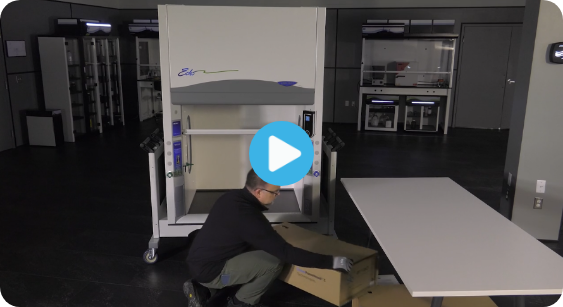
Installing it
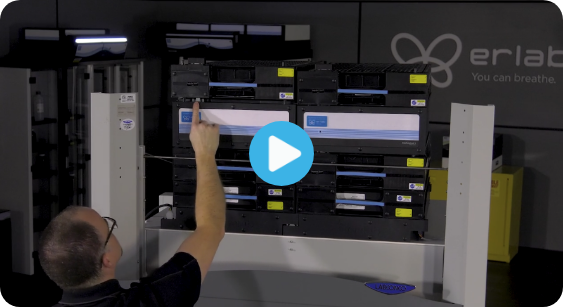
Starting it and connecting to wifi
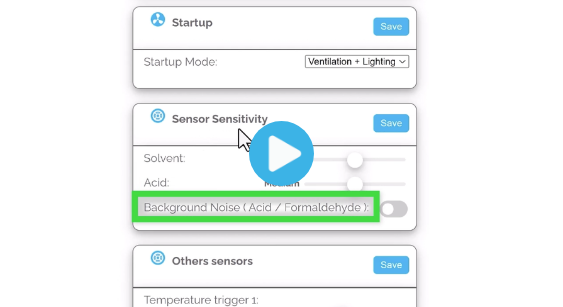
Configuring it
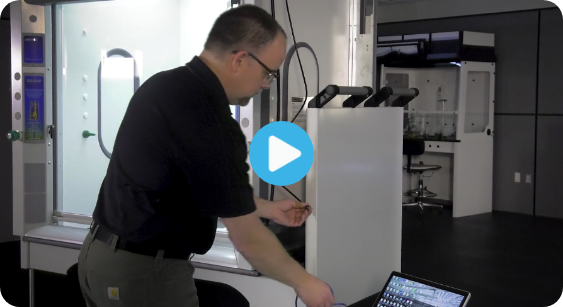
Hardwiring it to an ethernet connection
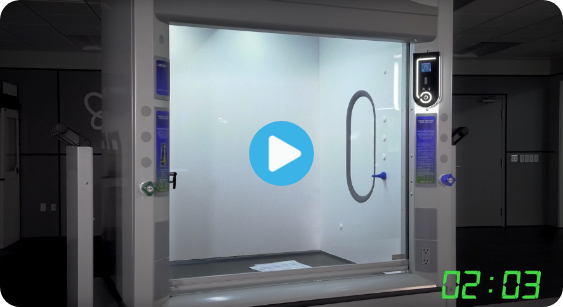
Calibrating the anemometer (air speed sensor)
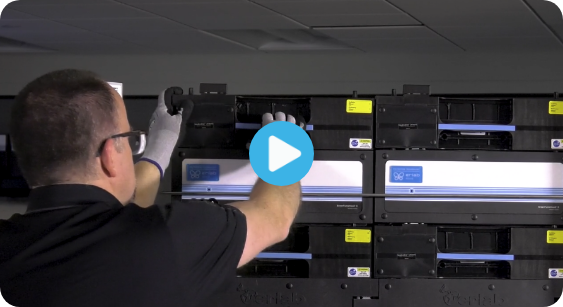
Replacing filters
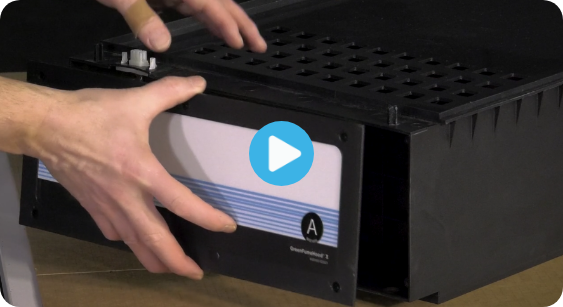
Replacing acid/formaldehyde sensors (every 2 years)
Resources At A Glance


The AFNOR NF X 15-211:
2009 standard
A performance standard for the protection
of laboratory technicians

Filtration Process Safety
Guarantee
Erlab’s filtration process guarantees
personal safety and laboratory success.

What Makes Us Different
Recognizing the difference and superiority
of Erlab’s filtration technology.
Frequently Asked Questions
About the Technology
What is Erlab GreenFumeHood®3?
GreenFumeHood®3 is Erlab's integrated filtration technology for fume hoods. It consists of Neutrodine®Unisorb molecular filters, HEPA particulate filters (when needed), a sensor suite for continuous monitoring, and the Smart Command interface. The technology converts a traditional fume hood into a filtered, recirculating system that requires no ductwork and no building exhaust.
What is Neutrodine® Unisorb?
Neutrodine® Unisorb is Erlab's proprietary filtration formulation that handles solvents, acids, and bases simultaneously with a single filter. Conventional activated carbon requires different carbon types for different chemical families. Neutrodine®Unisorb uses a multi-layer approach that transforms molecules during passage, enabling simultaneous adsorption of chemical classes that would otherwise require separate filtration systems.
How is this different from regular activated carbon?
Regular activated carbon adsorbs molecules based on physical attraction to the carbon surface. It works well for non-polar organic solvents but struggles with polar molecules, acids, and bases. Most carbon filters require impregnation with heavy metals or blending of different carbon types to handle mixed chemistry. Neutrodine®Unisorb achieves broader chemical compatibility without heavy metal impregnation or carbon blending, using a proprietary multi-layer formulation developed over five years of R&D.
What chemicals can GreenFumeHood®3 handle?
Erlab has validated over 700 chemicals for use with GreenFumeHood®3. The validated list includes common organic solvents (acetone, toluene, hexane, ethanol, methanol), acids at room temperature (hydrochloric, sulfuric, nitric, acetic), bases, inorganic compounds, formaldehyde, and ammonia. Each chemical has documented retention capacity and projected filter life based on usage volumes.
What chemicals are NOT appropriate?
Perchloric acid and hot acid digestions require dedicated wash-down ducted systems. Unknown or highly variable chemistry needs ducted exhaust. Large-scale synthesis with significant heat generation exceeds filtration capacity. Radioactive materials require specialized containment. Any chemistry not validated through the eValiQuest process should not be used with GreenFumeHood®3.
What does AFNOR NF X 15-211 certification mean?
AFNOR NF X 15-211 is the most stringent safety standard for filtered fume hoods. It requires that exhaust concentrations never exceed 1% of the Threshold Limit Value (TLV) for any chemical under normal operating conditions. The standard also requires documented containment efficiency, maintained air face velocity, and a complete chemical listing with retention capacity data. GreenFumeHood®3 meets both Class 1 (with safety filter backup) and Class 2 requirements.
About Safety and Monitoring
How do I know the filters are working?
GreenFumeHood3 includes a sensor suite that continuously monitors filtration performance. The VOC sensor (Molecode S) is standard on all units. Acid sensors (Molecode A) and formaldehyde sensors (Molecode F) are added based on your specific chemistry. When sensors detect that filtration efficiency is declining, you receive visual and audible alerts before any safety threshold is reached.
What happens if a filter saturates?
GreenFumeHood3 uses a two-level filtration system (Class 1 per AFNOR NF X 15-211). When the main filter approaches saturation, molecules are directed to the safety filter. You receive alerts to replace the main filter before the safety filter is engaged. At no point are you operating without backup protection.
How does the detection system work?
Three specialized sensors monitor different chemical classes. Molecode S uses semiconductor detection for volatile organic compounds. Molecode A uses electrochemical detection for acid vapors. Molecode F uses electrochemical detection for formaldehyde. Four additional sensors monitor operating conditions: anemometer for face velocity, tachometer for fan operation, and sensors for temperature and humidity inside the enclosure.
Can I monitor the system remotely?
Yes. The Smart Command interface connects via WiFi. The eGuard app provides real-time access to filtration status, alarm history, temperature and humidity trends, and face velocity data from any connected device.
About Filters and Maintenance
How long do filters last?
Filter life depends on chemical usage patterns. Typical filter life is 18-48 months. Heavy usage of challenging chemicals shortens filter life. Light usage of well-retained chemicals extends it. The eValiQuest assessment provides a projected filter lifecycle based on your specific chemistry and usage volumes.
How much do replacement filters cost?
Filter costs vary based on hood size and filter type. Your Erlab representative can provide specific pricing during the eValiQuest assessment..
How do I replace filters?
Filters are designed for straightforward replacement. The Revolving® system means you replace one filter module at a time rather than all filters at once. Erlab provides documentation and training during eValiPass installation. Most filter changes take under 30 minutes.
Are spent filters hazardous waste?
No. Spent Erlab filters are made from environmentally friendly raw materials (coconut-derived activated carbon) and can be disposed through energy recovery. They do not require hazardous waste handling or manifesting.
About Cost and Energy
How much does GreenFumeHood®3 save compared to ducted hoods?
Energy savings depend on your climate, energy rates, and hood size. Published studies document ducted hood operating costs at $3.70 to $7.40 per CFM per year, or $4,400 to $9,300 annually for a typical 6-foot hood. GreenFumeHood®3 consumes 80-440 watts depending on size, with annual energy costs under $100 per hood. The primary ongoing cost is filter replacement rather than energy.
What about capital costs?
GreenFumeHood®3 eliminates the capital cost of ductwork, roof penetrations, make-up air systems, and HVAC upsizing. For new construction, this reduces mechanical systems sizing by 25% or more. For renovations, it eliminates the construction cost and timeline associated with building modifications.
Do utility rebates apply?
Many utility companies offer rebates for energy efficiency improvements. The University of Rochester case study included a $36,000 NYSERDA rebate for their GreenFumeHood®3 installation. Contact your utility account representative to ask about HVAC load reduction incentives.
About Installation and Flexibility
Does GreenFumeHood®3 require ductwork?
No. GreenFumeHood®3 filters contaminated air and returns clean air to the laboratory. No building exhaust, no roof penetrations, no make-up air systems required.
Can I move the hood later?
Yes. Filtered fume hoods with GreenFumeHood®3 technology are portable. They can be relocated to different benches, different rooms, or different buildings as laboratory needs change.
How long does installation take?
Most installations complete in a few hours. There's no coordination with building systems, no HVAC rebalancing, and no construction timeline. ValiPass certified installation includes setup, testing, validation, and training in a single visit.
Can GreenFumeHood®3 be added to existing fume hoods?
GreenFumeHood®3 is an integrated filtration technology designed for fume hood enclosures. Implementation depends on the specific hood design. Contact Erlab to discuss your existing equipment.
About Compliance and Documentation
Will EH&S department approve this?
Many institutions require case-by-case approval for filtered fume hoods. GreenFumeHood®3 provides the documentation EH&S teams need: AFNOR NF X 15-211 certification, ASHRAE 110 containment testing, validated chemical lists, monitoring protocols, and continuous alarm data. The eValiQuest process generates a complete submission packet for EH&S review.
What standards does GreenFumeHood®3 meet?
GreenFumeHood®3 complies with AFNOR NF X 15-211:2009 (Class 1 and Class 2), passes containment testing per EN 14175-3 and ASHRAE 110:2016, and operates within ANSI/ASSP Z9.5 laboratory ventilation program requirements.
What documentation is provided?
Every GreenFumeHood®3 installation includes a ValiPass Certificate of Validation listing approved chemicals, filter configuration, detection system requirements, and projected filter lifecycle. Ongoing documentation includes alarm histories, filter change records, and periodic assessment reports through the ValiGuard program.
Ready to Learn More?
Questions about GreenFumeHood®3 technology?
Contact our technical team to discuss your project.
