



How Advanced Media Capture What Ducts Miss
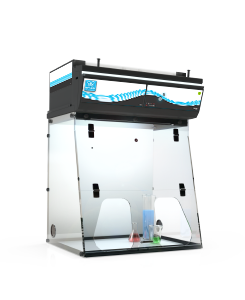
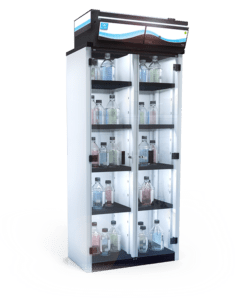
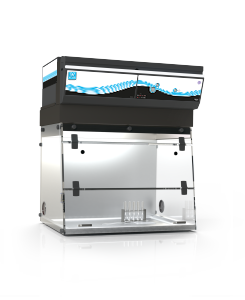
You’ve been told for decades that the only safe way to handle chemicals is to blow them out of the building. Push contaminated air through ductwork, exhaust it above the roofline, and let dilution be your solution. But while your ducted hood pushes formaldehyde and xylene into the atmosphere – where it becomes everyone’s problem – advanced filtration technology is quietly capturing and destroying those same molecules at the source.
The physics evolved. The chemistry is smarter. And the old assumptions about what filters can and cannot do are about as current as using mercury thermometers.
How Activated Carbon and HEPA Actually Work

Most people’s understanding of filtration stops at “carbon catches chemicals, HEPA catches particles.” Rightly so. You can’t be an expert at everything.
Activated carbon doesn’t filter anything in the traditional sense. It adsorbs molecules through van der Waals forces – weak electrical attractions that pull gas molecules to the carbon’s massive internal surface area. Picture a sponge, but at the molecular level, with pores measured in angstroms. A single gram of high-quality activated carbon from coconut shells can have over 1,000 square meters of surface area. That’s a quarter-acre of molecular parking spaces packed into something the size of a pencil eraser.
But not all carbons work for all chemicals. The pore size distribution, the surface chemistry, the activation process all determine what molecules will stick and what will blow right through. Standard activated carbon struggles with low-molecular-weight compounds, polar molecules, and chemicals with low boiling points. That’s why labs have traditionally needed different carbon types for acids versus solvents versus bases.
HEPA filtration operates through four simultaneous mechanisms that have nothing to do with sieve-like straining…
- Interception – particles following air streamlines come within one particle radius of a fiber and stick.
- Impaction – larger particles can’t follow air streams around fibers and crash directly into them.
- Diffusion – tiny particles bounce around randomly (Brownian motion) until they hit a fiber.
- Electrostatic attraction – charged particles are pulled to fibers without direct contact.
The genius is that these mechanisms work best at different particle sizes. Impaction handles large particles. Diffusion catches the tiny ones. And there’s a “most penetrating particle size” (MPPS) around 0.3 microns where all mechanisms are weakest – which is exactly where HEPA filters are tested. When a filter achieves 99.995% efficiency at the hardest size to catch, it performs even better above and below that size.
Layering Media to Widen Protection
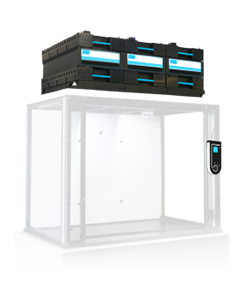
Targeted filtration doesn’t rely on a single capture mechanism or media type. It’s about creating a gauntlet that different contaminants can’t escape.
Consider a typical configuration for a lab handling both powders and solvents…

- Pre-filter catches large particles and protects downstream media.
- HEPA layer removes particulates down to viral sizes.
- Primary carbon bed adsorbs the bulk of molecular contaminants.
- Secondary specialized carbon targets specific problematic molecules.
- Optional safety filter provides backup if primary media saturates.
This isn’t just stacking filters randomly. The sequence matters. Particles would clog carbon pores, reducing chemical capacity. Certain chemical combinations can react on carbon surfaces if not properly sequenced. And some specialized carbons need protection from humidity or competing molecules that would occupy binding sites.
The real breakthrough? Formulations that handle multiple chemical classes simultaneously. Traditional activated carbon needed different types for acids, bases, and solvents – forcing labs to swap filters when changing procedures. Advanced molecular filtration technology uses proprietary treatments that transform molecules as they pass through multiple layers, allowing the same filter to handle acids, bases, and organics without heavy metal impregnation or carbon blending.
Selecting Filters by Chemical Profile
Here’s where the science meets the real world: your chemical profile determines your filtration needs, not the other way around.
Start with what you’re actually handling. Not what you might handle someday, not the entire chemical inventory, but what goes under the hood. A teaching lab running the same five experiments every semester has different needs than an R&D lab synthesizing novel compounds.
For each chemical, you need to know…
- Vapor pressure – how readily it evaporates.
- Molecular weight – affects diffusion and adsorption.
- Polarity – determines interaction with carbon surfaces.
- Concentration – both instantaneous and time-weighted average.
- Chemical family – acids need different treatment than amines.
Intentional filter selection isn’t guesswork. Validated databases now document retention capacity for 700+ specific chemicals, measured in molecular grams before breakthrough. That means you can calculate – not estimate – how long a filter will last based on actual usage patterns.
Take formaldehyde in a histology lab. Standard carbon has limited capacity for this small, polar molecule. But carbon with specific pre-treatment can increase retention by orders of magnitude. The filter selection software factors in your daily usage, concentration, and exposure time to predict filter life in months, not vague “replace annually” guidance.
The validation process has evolved from “trust us, it works” to documented proof. Testing follows standards like AFNOR NF X 15-211, which requires that filtered exhaust never exceeds 1% of the Threshold Limit Value. Every chemical gets tested at multiple concentrations, with results published as retention capacity in grams – real data you can verify and plan around.
Monitoring Saturation (Don’t Guess)
The biggest legitimate criticism of filtered hoods has been uncertainty about breakthrough – when contaminants start passing through saturated media. Advanced monitoring has made this objection obsolete.
Real-time electronic sensors now detect specific chemical families…
- Electrochemical sensors for solvents measure VOC levels continuously.
- Acid-specific detectors track pH-affecting vapors.
- Formaldehyde sensors monitor this common but problematic chemical.
- Photoionization detectors catch a broad range of organics.
These aren’t simple threshold alarms. Advanced systems track baseline levels, detect trends, and differentiate between normal operations and problems like spills or filter saturation. Smart systems can even identify specific chemicals based on sensor response patterns.
But electronic monitoring supplements, rather than replaces, validation testing. Colorimetric tubes – those glass vials that change color when exposed to specific chemicals – remain the gold standard for confirming filter performance. The difference now is that you’re testing to confirm what sensors already track, not flying blind between annual certifications.

The integration goes deeper than just sensors. Connected systems track…
- Flow rates and face velocities.
- Temperature and humidity (which affect adsorption).
- Filter installation dates and runtime hours.
- Usage patterns and chemical exposure history.
When all these parameters integrate, the system can predict filter exhaustion before it happens, schedule maintenance during downtime, and provide documentation for safety audits. You know exactly when to change filters – not too early (wasting money) and not too late (risking exposure).
Maintenance and Documentation
The paperwork that keeps you compliant has gotten both simpler and more comprehensive. Instead of generic certificates, you get…
Chemical approval lists specific to your filter configuration, showing retention capacity in grams for each approved substance. Not “good for organic vapors” but “217 grams of methanol before breakthrough.”
Lifecycle predictions based on your actual usage profile. Input your chemicals, quantities, and frequency. Get back a timeline in months, with adjustment factors for temperature and humidity.
Validation certificates that travel with the equipment. Every filter ships with test data. Every installation includes commissioning reports. Every filter change documents performance verification.
Digital audit trails that satisfy increasingly strict requirements. Time-stamped sensor data, filter change records, alarm histories, and usage logs – all exportable for inspections.
The maintenance itself has simplified. Filters designed for tool-free replacement. Pre-filters that extend primary media life. Modular designs that let you change only what’s exhausted. And disposal? Spent carbon filters aren’t automatically hazardous waste – they can often be handled as regular solid waste, depending on what they’ve captured.
TL:DR
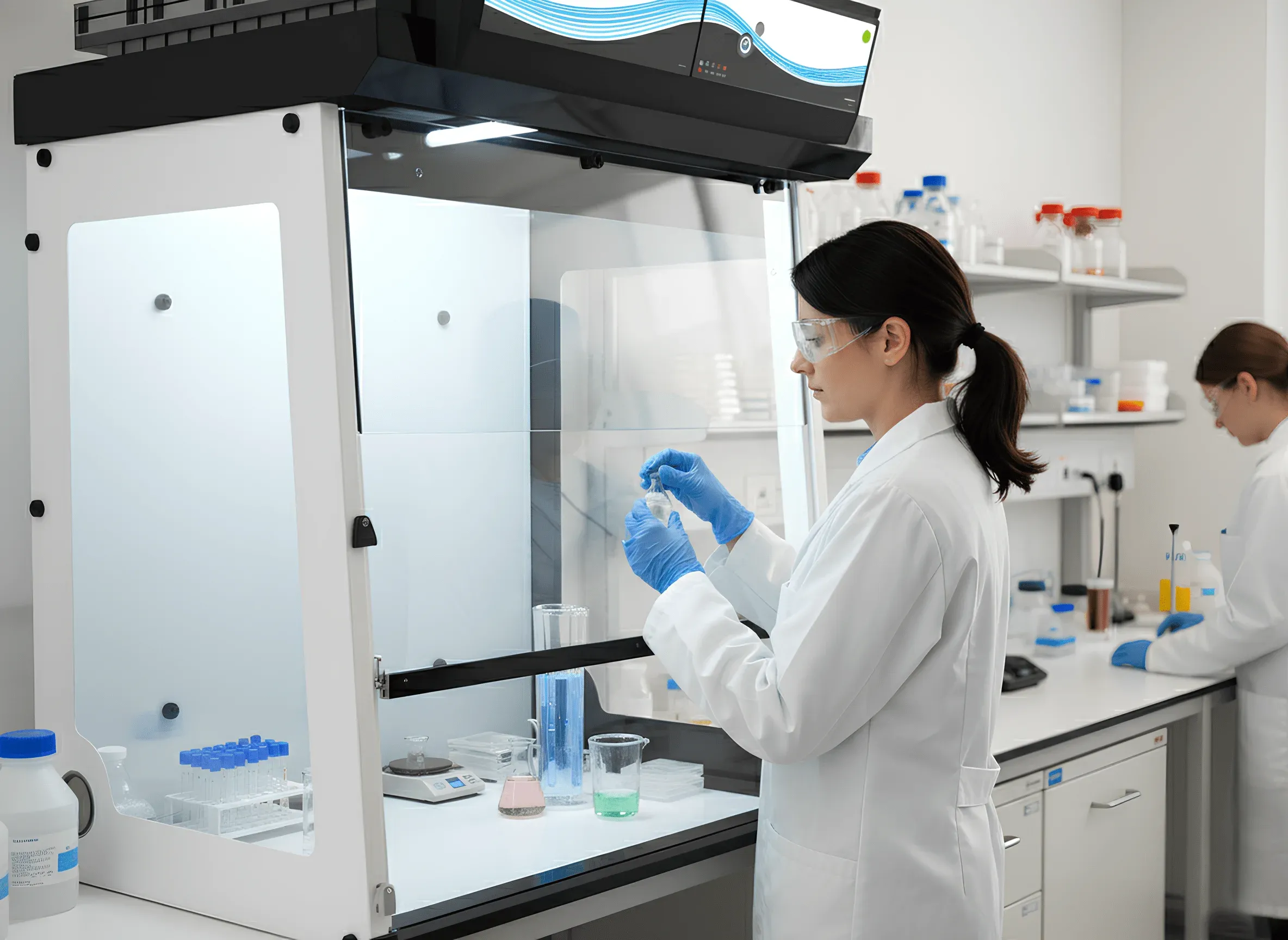
Advanced filtration technology isn’t magic. It can’t handle every chemical, won’t work for every application, and requires more thought than “turn on the fan.” But for the majority of laboratory chemical handling – known chemicals, moderate quantities, standard procedures – filtered hoods now offer something ducted systems never could: complete containment without environmental discharge.
The physics and chemistry are proven. Multiple capture mechanisms working in concert. Validated retention capacities for specific chemicals. Real-time monitoring that eliminates guesswork. And documentation that stands up to scrutiny.

The question isn’t whether filtration can match ducted exhaust for safety – properly specified and maintained systems already exceed ducted performance for appropriate applications. The question is whether you’re ready to reconsider what you’ve been told about the “only safe way” to handle laboratory chemicals.
Because while ducted systems will always have their place for certain high-hazard applications, sending everything up the stack isn’t protection – it’s just relocating the problem. Targeted filtration captures what ducts miss: the opportunity to actually remove contaminants from existence, not just from your immediate vicinity.
