


WHAT’S IN THE AIR YOUR STUDENTS AND STAFF BREATHE?
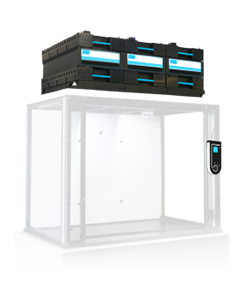
The air inside your classrooms can be 2-5x more polluted than the air outside. You’d never know without measuring it. Erlab’s AirGradient monitoring system shows you exactly what’s in your air, in real time. Then HALO – our ceiling-mounted air purification system – improves the quality of the air everyone in the class is breathing


Ceiling-mounted H14 HEPA filtration

Fewer sick days for students and teachers

Costs pennies a day to run

No HVAC modifications required

Real-time air quality monitoring

Proven in laboratories since 1968
Schedule your consultation right now
Tell us about your school, district, and goals, and a dedicated IAQ specialist will reach out to help sort out what you need.

Why Indoor Air Quality For Schools Is A Big Deal
The EPA Has Been Saying This For Years.
Here’s What The Data Looks Like.
The EPA’s Science Advisory Board has consistently ranked indoor air pollution among the top five environmental risks to public health. Its research shows that indoor pollutant levels can be 2-5x higher than outdoor levels – and occasionally more than 100 times higher. Nearly half of all U.S. schools have reported problems related to indoor air quality, and the average school building in the country is over 55 years old.
Your students spend 6-8 hours a day breathing that air. Here’s what’s at stake.
| What the EPA has found | What it means for your district |
|---|---|
|
Nearly 1 in 13 school-age children has asthma
- the leading cause of school absenteeism due to chronic illness. Indoor allergens like dust mites, mold, and pests are documented asthma triggers. |
Every asthma-related absence is a student falling behind, a parent missing work, and a potential liability issue for your district. These triggers are controllable.
|
|
Indoor air pollutant levels can be 2-5x higher than outdoor levels
- and people spend roughly 90% of their time indoors. Children breathe more air relative to their body weight than adults, making them more susceptible to airborne contaminants. |
Your students are more vulnerable to the pollutants in your classrooms than the adults making decisions about those classrooms. The exposure is constant and cumulative.
|
|
Poor IAQ increases short- and long-term health effects
including headaches, fatigue, eye irritation, coughing, allergic reactions, and aggravated respiratory illness for both students and staff. |
These are the complaints your nurses log, your teachers report, and your parents raise at board meetings. They have a documented cause - and it's the air.
|
|
Failure to address IAQ can lead to accelerated building deterioration, school closures, negative publicity, strained parent relationships, and liability problems.
|
Ignoring air quality doesn't save money. It shifts costs into substitute teachers, emergency repairs, legal exposure, and lost community trust.
|
|
Nearly half of all U.S. schools have reported IAQ-related problems.
The average school building was constructed around 1959. |
If your buildings are older than 30 years and you haven't assessed your air quality, the odds are not in your favor.
|
These are findings from the EPA, the CDC, and the EPA’s Science Advisory Board – the same agencies whose frameworks your district already references in facility planning and grant applications.
The question isn’t whether indoor air quality affects your students and staff. The research settled that. The question is whether you’re measuring it.
You Can’t Fix What You Can’t See
Erlab AirGradient Shows You What’s Actually in Your Air
How do you know you don’t have an indoor air quality problem?
Most superintendents and facilities managers assume their HVAC system handles air quality. It’s why they invest huge budget in hvac upgrades for indoor air quality in schools.
The problem is, HVAC controls temperature and airflow. It was never designed to remove fine particulate matter, VOCs, CO₂ buildup, mold spores, or airborne pathogens from your classrooms.
HVAC modifications are the most expensive way to address air quality issues in schools.

Erlab AirGradient is an indoor air quality monitor for schools that measures what actually matters in your
buildings and drives the efficacy of your Erlab HALO indoor air filtration systems:

CO₂ levels
High CO₂ means insufficient ventilation. It causes headaches, fatigue, and reduced cognitive performance in students and staff. This is one of the most common and most overlooked problems in schools.
PM2.5 (fine particulate matter)
Particles small enough to enter the lungs and bloodstream. Linked to respiratory issues, aggravated asthma, and increased absenteeism.
TVOCs (volatile organic compounds)
Off-gassing from cleaning products, furniture, building materials, and classroom supplies.
NOx
Harmful gases from nearby traffic, gas-fired kitchen equipment, and building systems.
Temperature and humidity
Comfort factors that also indicate mold risk and respiratory stress.
| What It Measures | How It Measures | Why It Matters |
|---|---|---|
|
CO₂
|
NDIR sensor, auto-calibrates every 7 days | The most accurate method for detecting ventilation problems |
|
PM2.5
|
Laser scattering technology | Detects the fine particles linked to respiratory illness and asthma triggers |
|
TVOCs and NOx
|
Factory-calibrated Sensirion SGP41 sensor | Picks up off-gassing from cleaning products, furniture, and building materials |
|
Temperature and humidity
|
Sensirion SHT3x/4x sensor | Indicates comfort levels and mold risk |
All data feeds to the Erlab dashboard in real time.
You get a continuous picture of what your students and teachers are breathing – not a one-time snapshot from an outside consultant who shows up, takes readings for an hour, and disappears.
Try It For 3 Weeks. See The Risks You’re Blind To.
We’ll install AirGradient monitors in up to 4 of your classrooms for a 3-week assessment period. You’ll see real air quality data on the Erlab dashboard – CO₂ trends through the school day, PM2.5 spikes during arrival and dismissal, humidity patterns that indicate mold risk.
Complete the 3-week monitoring trial and we’ll take 15% off the purchase price of your entire HALO order.
The data either shows your air is fine – in which case you have documentation to prove it – or it shows you where the problems are, which means you can fix them with precision instead of guessing.

HALO Is Lab-Grade Air Purification Built for Schools
The Same Filtration Technology That Protects Chemical and Biological Laboratories Protects Your Classrooms
Erlab has been building filtration systems for critical environments since 1968. The HALO takes that same technology and puts it where your students, teachers, and staff spend their days.
Why ceiling-mounted matters.
Harmful airborne particles – viruses, bacteria, mold spores, ultra-fine particulate – rise above the breathing zone and stay suspended for hours. The HALO pulls air upward and away from occupants, filters it through H14 laboratory-grade HEPA media, and returns clean air through four diffusers that create uniform circulation throughout the room. No horizontal redistribution. No blowing contaminated air from one person toward another.
What’s inside:

H14 HEPA filter
99.995% efficiency at the most penetrating particle size, certified to EN 1822 standard

Proprietary Carbon AX
Tested for VOC adsorption, removing chemical vapors that HEPA alone can’t capture

Pre-filter
Catches dust, hair, and larger particles to extend the life of your primary filters

Smart LED status lights
Visual confirmation of operating status without climbing a ladder

BMS/BAS alarm contact
Integrates with your existing building management system

Ethernet port
Remote monitoring capability

A single HALO provides one complete equivalent air change per hour (eACH) for every 1,000 square feet of floor space. Multiple units in larger spaces increase air changes proportionally. Every district gets a tailored placement plan based on room dimensions, ceiling height, and occupancy.
The HALO runs on 50 watts. That’s less than a standard light bulb. Compare that to the energy cost of pushing your HVAC harder – which strains your mechanical systems, reduces efficiency, and doesn’t actually filter fine particles anyway.
Help Your Community Stay Healthy
Healthier Air Creates Outcomes That Extend Into Your Community
A student with aggravated asthma misses school. A parent takes a day off work to care for that student.
A teacher calls in sick from the same air quality issue, and the district scrambles for substitutes.
Multiply that across a building. Across a district. Across a school year.
When you improve the air in your classrooms, the downstream effects reach further than your campus:

Fewer student sick days
means more consistent instruction, better academic performance, and fewer disruptions to families who depend on school schedules.

Fewer teacher sick days
means less substitute coverage, more instructional continuity, and lower costs for the district.

Reduced asthma triggers
Poor IAQ is one of the leading causes of asthma-related absenteeism in schools. Removing fine particulate and mold spores from classroom air directly addresses this.

Better cognitive performance
Elevated CO₂ levels measurably reduce cognitive function. Students in well-ventilated, clean-air classrooms perform better on assessments.

Community health impact
Your school becomes a driver of community wellbeing beyond the education you provide. Healthier students mean healthier families. Parents take fewer days off work. The economic impact is real.
The EPA and CDC have documented the connection between indoor air quality and student health, attendance, and academic outcomes. Schools that adopt proactive IAQ strategies see measurable improvements.
How Districts Are Paying For This
Federal, State, and Flexible Financing Options
Budget is always the question. Here’s what’s available.
Federal funding sources
| Funding Source | What It Is | How It Applies |
|---|---|---|
| ESSER (American Rescue Plan) | Billions distributed directly to districts for safe school operations. Explicitly covers air filtration, purification, and monitoring equipment. | Direct purchase of HALO units and AirGradient monitors. Funds must be spent by Dec 31, 2026. |
| EPA IAQ Grants | Competitive grants ($5M-$8M per award) for organizations helping K-12 schools adopt IAQ management plans. | Connect with EPA grantees for technical assistance and sub-awards. Current projects run through 2029. |
| DOE Efficient & Healthy Schools | Technical assistance program connecting schools to planning support and infrastructure funding. | Outreach channel for pilot programs and funded deployments. |
| Bipartisan Infrastructure Law / IRA | Block and competitive grants flowing to state energy offices for ventilation and IAQ upgrades in public buildings. | Capital funding source for comprehensive building improvements including HALO. |

State programs
vary, but many include grants for HVAC, ventilation, and air quality improvements in public schools. California’s CalSHAPE is one example. Your state energy office likely has programs that apply.

Small-scale entry points
like Go Green Initiative mini-grants (~$45,000) are useful for pilot projects – install AirGradient monitors and a few HALO units in your worst-performing buildings, collect data, and build the case for district-wide deployment.

Flexible financing
through NEC Financial Services is available for districts that want to move forward now without waiting for grant cycles. NEC has been helping organizations acquire equipment since 1989.
We’ll help you identify which funding sources apply to your district and support your applications with the documentation and performance data grant reviewers want to see.
The Concerns
Every Superintendent Raises
You’re Not the First District to Ask These Questions.
Here’s What We Tell Them.
| Your Concern | The Reality | What We'll Show You |
|---|---|---|
| We already have HVAC. Why do we need this? | HVAC controls temperature and airflow. It doesn't filter fine particulate, VOCs, or pathogens at the level HALO does. They solve different problems. | We'll install AirGradient monitors in your buildings and show you what your HVAC is and isn't handling. The data speaks for itself. |
| We can't afford this right now | Multiple federal and state funding sources explicitly cover IAQ equipment. Flexible financing is also available through NEC Financial Services. | We'll map the funding sources that apply to your district and help you with documentation. |
| How do we know it actually works? | HALO meets the national standard for reducing airborne infections in occupied buildings and has been independently tested in controlled and real-world conditions, showing up to 80% reduction in particulate load. | Independent test reports from ARE Labs, real-world case studies, and your own AirGradient data showing before-and-after results in your buildings. |
| Our buildings are old. Installation sounds disruptive. | HALO mounts to standard ceiling grids and runs on a standard outlet. No ductwork. No construction. No HVAC modifications. | A building walkthrough with your facilities team to show exactly how installation works in your specific spaces. |
| The board will want to see ROI | Reduced absenteeism, fewer substitute teacher costs, lower HVAC strain, and improved academic outcomes all have measurable financial impact. Proactive IAQ strategies also support grant eligibility. | We'll build a district-specific presentation with your monitoring data, projected cost offsets, and applicable funding sources. |
| Is this just a COVID product? | The HALO was designed for laboratories decades before COVID. IAQ concerns include CO₂, PM2.5, VOCs, mold, allergens, and seasonal respiratory illness - problems that exist every day of every school year. | Review of your AirGradient data showing the daily pollutants in your buildings that have nothing to do with any single virus. |
Assess. Address. Assure.
Three Steps to Clean Air You Can Prove

Step 1.
Assess
Install AirGradient monitors across your facilities. See real-time data on CO₂, PM2.5, TVOCs, NOx, temperature, and humidity. Identify problem areas with actual measurements instead of assumptions.

Step 2.
Address
Deploy HALO units based on the data. Ceiling-mounted H14 HEPA filtration with Carbon AX for VOCs. Tailored placement plans for each building. No construction, no HVAC modifications.

Step 3.
Assure
Continuous monitoring through the Erlab platform. Daily, weekly, and monthly reports. Real-time alerts. Proof of performance for your board, your community, and your grant reporting.
Complete the 3-week monitoring assessment and get 15% off your entire HALO order
Here’s How It Works
From First Conversation to Clean Air – The Whole Process

Step 1.
Talk to us about your facility
What happens?
Building ages, HVAC setup, known complaints, number of buildings. A conversation, not a sales pitch. We want to understand your district before we recommend anything.

Step 2.
Decide where to start
What happens?
Monitoring first, filtration first, or both. Many districts start with a 3-week AirGradient trial in their most concerning buildings to get real data before committing to anything larger.

Step 3.
Map your funding and financing
What happens?
We’ll help you identify which federal, state, and financing options apply to your district and support your documentation. If grant applications need performance data or technical specs, we provide them.

Step 4.
Build your deployment plan
What happens?
Building-by-building placement plans based on room dimensions, ceiling types, and occupancy. Scaled to your budget and timeline – whether that’s three classrooms this quarter or an entire district over two years.

Step 5.
Install
What happens?
Ceiling-mounted, plugs into a standard outlet. No ductwork, no construction, no classrooms taken offline. Most spaces are operational the same day.

Step 6.
See the results in your data
What happens?
AirGradient monitors show the before-and-after in real time. Your own buildings, your own numbers – not a lab test from somewhere else.

Step 7.
Show your community what you’ve done
What happens?
Share the data with staff, families, and your board. Proof that you’re protecting the people in your buildings – backed by numbers they can see.
Frequently Asked Questions
Indoor Air Quality in Schools
What is indoor air quality and why does it matter in schools?
Indoor air quality refers to the measurable conditions of the air inside your buildings - specifically levels of CO₂, fine particulate matter (PM2.5), volatile organic compounds (VOCs), mold spores, and other pollutants. It matters in schools because children spend 6-8 hours a day breathing that air. Poor IAQ is linked to increased absenteeism, aggravated asthma and respiratory issues, reduced cognitive function, and worse academic performance.
What are the most common indoor air quality problems in schools?
The most common problems are elevated CO₂ from inadequate ventilation (especially in older buildings), fine particulate matter from outdoor traffic and indoor sources, VOCs off-gassing from cleaning products and building materials, mold and mold spores from humidity issues, and airborne pathogens that spread respiratory illness. Many schools have several of these problems simultaneously without knowing it.
How does poor air quality affect student performance?
Elevated CO₂ levels measurably reduce cognitive function - students in poorly ventilated classrooms score lower on assessments and have more difficulty concentrating. PM2.5 and other pollutants aggravate asthma and allergies, leading to missed school days. Even moderate air quality issues cause headaches and fatigue that undermine learning throughout the day.
Is indoor air quality in schools regulated?
The EPA and CDC encourage schools to adopt comprehensive IAQ management plans, and ASHRAE 241 (published in 2023) is the first national standard specifically addressing airborne pathogen control in occupied buildings. Some states have their own requirements. Demonstrating proactive IAQ strategies also helps schools qualify for federal and state funding.
Can't we just open windows to improve air quality?
Opening windows helps with CO₂ and general ventilation when weather allows. But it does nothing for PM2.5 from outdoor traffic, pollen, wildfire smoke, or outdoor pollution. It also creates temperature control problems, raises energy costs, and is impractical during much of the school year in most climates. Air purification addresses what ventilation alone cannot.
How do I know if my school has an air quality problem?
Without monitoring, you don't. Complaints about stuffiness, headaches, or odors are symptoms, but they don't tell you what's actually in the air. The only way to know is to measure it. That's why we start every engagement with the AirGradient monitoring system - it gives you real data instead of guesses.
Does HVAC handle indoor air quality?
HVAC handles air temperature, movement, and basic ventilation. It was not designed to filter fine particulate matter, remove VOCs, or eliminate airborne pathogens. Upgrading HVAC filters to higher MERV ratings increases restriction on the system, forces fans to work harder, and can compromise your HVAC performance. HVAC and air purification solve different problems.
Monitoring and Assessment
What does the AirGradient monitor measure?
CO₂ (using NDIR technology), PM2.5 (using laser scattering), TVOCs and NOx (using Sensirion SGP41 sensors), and temperature and humidity (using Sensirion SHT3x/4x sensors). It auto-calibrates every 7 days and feeds data to the Erlab dashboard continuously.
How is air quality monitoring different from a one-time air test?
A one-time test shows you a snapshot - what the air looked like during the hour someone was there with equipment. Continuous monitoring shows you patterns. CO₂ spikes during third period. PM2.5 rising during arrival and dismissal. Humidity creeping up in the east wing every afternoon. Those patterns tell you where the real problems are and how to fix them..
What does the Erlab dashboard show?
Real-time data on every parameter being measured, a wellness score for each monitored space, yesterday's AI-generated report, data comparisons over time, weekly and monthly reports, critical area alerts, and predictive analysis. You can see your entire district's air quality from one screen.
What is a wellness score?
The wellness score is a composite rating that reflects the overall air quality in a monitored space, based on all measured parameters - CO₂, PM2.5, TVOCs, temperature, humidity, and more. It gives you a quick read on which spaces are healthy and which need attention, without requiring you to interpret each data point individually.
How many monitors does a school need?
It depends on your buildings. The goal is to monitor representative spaces - classrooms, cafeterias, gymnasiums, administrative areas - to understand air quality patterns across your facilities. We'll develop a placement plan based on your building layouts and concerns.
What happens during the 3-week monitoring trial?
We install AirGradient monitors in your facilities and you get access to the Erlab dashboard. For three weeks, you see your buildings' actual air quality data - CO₂ trends, PM2.5 levels, humidity patterns, the full picture. At the end, the data either confirms your air is fine (and you have documentation proving it) or it shows you exactly where the problems are. Complete the trial and you get 15% off your entire HALO order.
HALO Air Purification
What is the HALO?
The HALO is a ceiling-mounted air purification system built by Erlab, a company that has manufactured filtration equipment for chemical and biological laboratories since 1968. It uses H14 laboratory-grade HEPA filtration combined with Erlab's proprietary Carbon AX technology to remove fine particulate matter, airborne pathogens (viruses, bacteria, mold, fungi), and volatile organic compounds from indoor air.
Why is the HALO mounted on the ceiling?
Harmful airborne particles - viruses, bacteria, mold spores, ultra-fine particulate - rise above the breathing zone and stay suspended for hours. Ceiling placement pulls contaminated air upward and away from occupants, filters it, and returns clean air through four diffusers that create uniform circulation. Floor-level and tabletop purifiers create horizontal airflow that can redistribute particles from one person toward another.
What's the difference between HALO and a portable air purifier?
Portable units sit at floor level and push air horizontally, which can move contaminated air from person to person. HALO mounts at the ceiling where harmful particles concentrate, draws air upward and away from occupants, and distributes clean air uniformly through four diffusers. It's the difference between a space heater and a heating system. The HALO also uses laboratory-grade H14 HEPA filtration - a higher standard than what most portable units offer.
How much area does one HALO cover?
One HALO provides one complete equivalent air change per hour (eACH) for approximately 1,000 square feet of floor space. A typical classroom needs one unit. Larger spaces like cafeterias, gymnasiums, and auditoriums need more. Every district gets a tailored placement plan based on actual room dimensions, ceiling height, and occupancy.
How many HALO units does a typical school need?
It depends on the building. A school with 30 standard classrooms, a cafeteria, a gym, and administrative offices would need a different plan than a school with open floor plans or portables. We create building-by-building placement plans based on your actual spaces rather than generic estimates.
How much does the HALO cost to operate?
Each unit runs on 50 watts - pennies a day in electricity. Compare that to the cost of pushing your HVAC system harder with upgraded filters, which strains your mechanical systems, reduces efficiency, and drives up energy bills substantially.
How loud is the HALO?
It's designed for occupied spaces where people need to concentrate, including laboratories where precision work happens. It will not interfere with classroom instruction.
Does HALO work independently from our HVAC system?
Yes. HALO requires no connection to your HVAC, no ductwork, and no mechanical modifications. It supplements your existing infrastructure without adding load to your mechanical systems. Units mount to your ceiling grid and plug into a standard outlet.
Does HALO integrate with our building management system?
Yes. Each unit has a BMS/BAS alarm contact and an Ethernet port for remote monitoring.
Has the HALO been independently tested?
Yes. ARE Labs conducted independent testing in both controlled and real-world conditions. Tests showed significant reductions in particulate load - up to 80% - including against aerosolized viruses. The HALO meets the national standard for reducing airborne infections in occupied buildings (ASHRAE 241).
Is this just a COVID-era product?
No. The HALO was engineered for laboratory environments decades before COVID. Indoor air quality concerns in schools include CO₂ buildup, PM2.5, VOCs, mold, allergens, and seasonal respiratory illness - problems that exist every day of every school year regardless of any specific virus.
Installation and Maintenance
How is the HALO installed?
It mounts to a standard ceiling grid and plugs into a standard electrical outlet. No ductwork. No roof penetrations. No HVAC modifications. No construction disruption. Installation does not require taking classrooms offline for extended periods.
What ongoing maintenance does the HALO require?
Pre-filter replacement annually. Carbon AX replacement annually. H14 HEPA filter replacement every three years. All filter replacements are included in the AAA plan option.
Can we install HALO during the school year or does it require summer work?
Installation is minimally disruptive and can happen during the school year. That said, many districts prefer to deploy during breaks for scheduling convenience. Either approach works.
What if we have older buildings with non-standard ceilings?
The HALO uses ceiling suspension rings and can be adapted to various ceiling types. We'll do a building walkthrough with your facilities team to confirm installation approach for your specific spaces.
Funding and Paying for IAQ Improvements
What federal funding is available for school air quality improvements?
Several sources exist. ESSER (Elementary and Secondary School Emergency Relief) funds explicitly cover air filtration, purification, and monitoring equipment. EPA competitive grants support IAQ management plans in K-12 schools. The DOE's Efficient and Healthy Schools program provides technical assistance and connections to infrastructure funding. The Bipartisan Infrastructure Law and Inflation Reduction Act include grants for ventilation and IAQ upgrades in public buildings.
Can ESSER funds be used to purchase air purifiers and monitors for schools?
Yes. Department of Education guidance explicitly lists air filtration, purification, and monitoring equipment as eligible ESSER expenditures. This includes devices like the HALO and AirGradient monitors. Note that American Rescue Plan ESSER funds must be spent by December 31, 2026.
What if we've already used our ESSER funds?
ESSER isn't the only source. EPA IAQ grants (current projects run through 2029), state-level programs, DOE infrastructure funding, and mini-grants like the Go Green Initiative (~$45,000 for pilot projects) are all available depending on your state and district. We'll help you identify which sources apply to your situation.
Are there state-level funding programs for school air quality?
Yes, though they vary by state. California's CalSHAPE is one example - it provides grants specifically for ventilation, HVAC improvements, and air quality upgrades in public schools. Many states administer State Energy Program (SEP) funds from the DOE that can include IAQ projects. Contact us and we'll help you identify what's available in your state.
Is financing available if we can't wait for grant cycles?
Yes. Erlab offers flexible financing through NEC Financial Services for districts that want to move forward now. NEC has been helping organizations acquire equipment since 1989.
How do we justify this purchase to our school board?
Start with data. The 3-week AirGradient monitoring trial gives you real numbers showing what's in your buildings' air. Combine that with applicable funding sources, projected reductions in absenteeism-related costs (substitute teachers, lost instructional days), energy savings versus HVAC upgrades, and the community health impact. We'll help you build a district-specific presentation.
Can we start small and expand later?
Absolutely. Many districts start with the buildings that have the most complaints or the oldest HVAC systems, install monitors, collect data, and expand from there. The 3-week monitoring trial is specifically designed for this approach. Small-scale mini-grants (~$45,000) can fund an initial pilot that builds the case for district-wide deployment.
Getting Started
What's the first step?
Start with monitoring. We'll install AirGradient sensors in your facilities and give you access to the Indoorcare dashboard. You'll see what your air actually looks like before making any purchasing decisions. Complete the 3-week monitoring trial and get 15% off your entire HALO order.
What if our air quality data comes back fine?
Then you have documentation proving it. That's valuable for parent inquiries, board questions, grant applications, and your own peace of mind. Either way, the data gives you something you didn't have before.
How long does it take to see results after installing HALO?
The HALO begins filtering air immediately upon installation. If you're running AirGradient monitors alongside it, you'll see the data change in real time - before-and-after comparisons from your own buildings, not a lab test somewhere else.
Do you work with districts of all sizes?
Yes. Whether you're a single-building district, managing dozens of facilities, or hundreds, we'll create a plan that fits your scale, your buildings, and your budget. The approach is the same - start with data, address what the data reveals, and prove results through ongoing monitoring.
