




The engineering controls that make October’s training last all year
October’s Biosafety Month posters are coming down. The training sessions are complete. Your team just spent four weeks focused on safety protocols, proper PPE use, and contamination prevention.
How do you keep that momentum going when the calendar flips to November?
Awareness campaigns create temporary spikes in compliance. You saw it during Biosafety Month in October.
- Better aseptic technique at the BSC
- More consistent chemical handling in fume hoods
- Proper waste segregation per SOPs
But without structural changes to support these behaviors, old habits creep back by December.
The answer isn’t more training. It’s engineering controls that make safe behavior the default – and keep you audit-ready year-round.
I am text block. Click edit button to change this text. Lorem ipsum dolor sit amet, consectetur adipiscing elit. Ut elit tellus, luctus nec ullamcorper mattis, pulvinar dapibus leo.
Recap Your October Wins (And Where They’re Already Slipping)
Take stock of what actually improved during Biosafety Month:
| What Improved | What You Saw | What’s Already Slipping |
| BSC Technique | Proper aseptic technique, minimizing interventions, organized workspace | QC analysts rushing through sterility testing again |
| Chemical Handling | Following SOPs for solvent handling, using fume hoods for weighing operations | API powders being weighed on open benches |
| Waste Management | Proper segregation per waste stream SOPs | Solvent waste containers overfilling again |
| Data Integrity | Complete documentation of deviations | “Minor” incidents going unreported |
This isn’t a failure of training or willpower. It’s what happens when you ask people to maintain perfect GMP behavior in an imperfect environment:
- Your BSC might be in a high-traffic area where maintaining ISO 5 conditions is challenging
- Your fume hood might be so loud that analysts avoid using it during potency testing
- Your chemical storage might be in a different suite, making proper segregation time-consuming
The Cost of NOT Acting. Real FDA & Regulatory Scenarios
Before we talk solutions, let’s be honest about what happens when engineering controls don’t get implemented:
The Sterility Failure (Contract Manufacturing Organization, 2024):
- Month 1: Post-training compliance drops to 60%
- Month 3: Environmental monitoring shows excursions in Grade C area
- Month 4: Sterility test failure on commercial batch
- Month 5: Batch rejection: $1.2M loss
- Month 6: FDA 483 observation for inadequate contamination control
- Total damage: $3M+ including investigation, CAPA, and lost client confidence
The Potent Compound Exposure (Pharma QC Lab, 2023):
- Analyst developed sensitization to beta-lactam during weighing
- Root cause: Inadequate containment for HAPI handling
- Worker’s comp claim: $85,000
- OSHA citation: $13,000
- Emergency containment installation: $75,000
- Production shutdown during remediation: $450,000/day
- Could have been prevented: $35,000 balance enclosure with HEPA filtration
The Warning Letter (API Manufacturer, 2024):
- FDA inspection found “inadequate engineering controls for operator protection”
- Despite “comprehensive training program”
- Warning letter public within 30 days
- Stock price impact: -12%
- Remediation cost: $4.5M
- Lost contracts during remediation: $8M
Pick One Lasting Change to Implement
You can’t fix everything at once. But you can pick one engineering control that addresses your most critical GMP risk.
The key: Match the solution to your highest regulatory risk — not just the most visible problem.

If Sterility Assurance Was Your Focus:
Still seeing environmental monitoring excursions despite better technique? The issue might not be behavior.
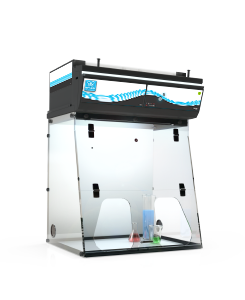
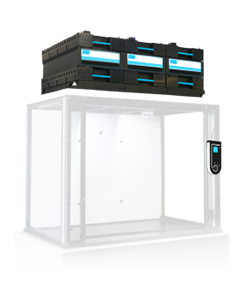
Consider: A ductless Class II BSC that can be positioned optimally in your cleanroom – away from doors, HVAC turbulence, and traffic patterns.

If Operator Exposure Kept Coming Up:
Analysts still resist using the fume hood for weighing operations? Ask why:
- Too much vibration affecting analytical balances?
- Located outside the QC suite?
- Not enough hoods for peak testing periods?
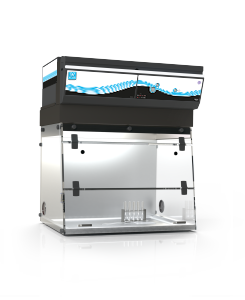
Consider: A ductless balance enclosure positioned at each weighing station — quiet operation, no vibration, HEPA filtration for powder containment.

If Specific Operations Are High-Risk:
- HAPI weighing where containment is critical
- Solvent dispensing in compounding areas
- Sample preparation with volatile organics
Consider: Targeted engineering controls for specific unit operations deliver better compliance than facility-wide solutions.
Map Your Specific Risk to Equipment Options
Different GMP operations require different engineering solutions:
| Risk Category | Current Challenge | Engineering Control Solution | Typical Investment | Regulatory Driver |
| Sterility assurance (aseptic processing, sterility testing) | BSC location compromises Grade A conditions | Ductless Class II BSCs – position for optimal airflow patterns | $15,000-25,000 | USP <797>, EU Annex 1 |
| Operator protection (HAPI weighing, API dispensing) | Inadequate containment for OEB 3-5 compounds | Ductless balance enclosures with HEPA/ULPA filtration | $8,000-18,000 | OSHA, ICH Q7 |
| Solvent handling (QC testing, sample prep) | Ducted hoods insufficient for peak testing periods | Ductless fume hoods at point of use | $5,000-12,000 | USP <467>, OSHA |
| Compounding operations (hazardous drugs) | USP <800> compliance gaps | Combination containment with HEPA and molecular filtration | $20,000-30,000 | USP <800>, NIOSH |
The Money Talk. Budget Reality and Compliance ROI
Let’s address the elephant in the room – funding in a cost-conscious pharma environment.
The Cost Comparison:
*The numbers below are for illustrative purposes only. Your specific costs will vary – but ductless will always skirt the ductwork and HVAC modifications that cause massive cost inflation in your installation.
| Ducted Installation | Ductless Installation |
| Hood unit: $15,000-25,000 | Hood unit: $8,000-18,000 |
| Ductwork: $10,000-30,000 | Ductwork: $0 |
| HVAC modifications: $15,000-40,000 | HVAC modifications: $0 |
| Validation/qualification: $10,000-15,000 | Validation/qualification: $5,000-8,000 |
| Production downtime: 2-4 weeks | Production downtime: 0 |
| Change control documentation: 40-80 hours | Change control documentation: 8-16 hours |
| Total: $50,000-125,000 | Total: $13,000-26,000 |
Operating Cost Reality:
| Ducted Fume Hood: | Erlab Captair Ductless Fume Hood: | Compliance ROI Timeline: |
|
|
|

Funding Options for Pharma/Medical:
- Capital Budget – Traditional CapEx purchase
- Operating Budget – Often easier for equipment under $50K
- Quality Budget – Post-audit or deviation
- EH&S Budget – After exposure incidents
- Financing Programs:
- Operating lease (preserves capital)
- Capital lease with buyout
- Deferred payment (install now, pay later)
- Rental programs for temporary needs
Getting Buy-In. Your Business Case for Quality & Operations
Here’s exactly how to sell this to leadership in pharma/medical settings:
For Your Lab Director/QA Manager:
The 3-Minute Quality Pitch
“Our Biosafety Month assessment identified [specific GMP risk]. Despite training, we’re still seeing [specific deviation trend]. This creates risk of [FDA observation/batch failure/patient safety issue].
A [specific engineering control] would cost approximately [$X], install without production disruption, and prevent [specific risk].
Based on our deviation history, this would reduce quality events by approximately [Y]% and save [$Z] annually in investigation costs alone.
I’ve confirmed this meets [specific regulation – USP, ICH, FDA guidance]. Can we discuss implementation before our next audit?”

For Your CFO/Site Director:
The Compliance Business Case:
| Metric | Current State | With Engineering Control |
| Quality events/quarter | 8-12 | 2-3 projected |
| Investigation hours/event | 40 hours | 10 hours |
| Batch right-first-time | 94% | 98% projected |
| Regulatory observations risk | High | Low |
| Annual deviation cost | $320,000 | $48,000 projected |
| ROI | — | 9 months |
“This investment prevents FDA observations and protects our inspection readiness.”

For Regulatory/Compliance:
The Audit-Ready Angle:
- “Addresses ICH Q7 protection requirements”
- “Closes gap from last FDA inspection”
- “Proactive control per quality risk management”
- “Includes full IQ/OQ/PQ documentation”
- “Supports data integrity with electronic monitoring”
Navigating Quality & EH&S Approval in GMP Facilities
Pharma facilities have specific requirements. Here’s how to navigate them:
Regulatory Compliance Package:
- USP <797>/<800> compliance for compounding
- ASHRAE 110 containment data
- NSF/ANSI 49 certification (for BSCs)
- EN 12469 compliance (for European sites)
- 21 CFR Part 11 compliance for electronic monitoring
Change Control Documentation:
- Risk assessment per ICH Q9
- Impact on validated processes
- Training requirements matrix
- Updated SOPs
User Requirements Specification (URS):
- Intended use and critical process parameters
- Chemical/biological agents handled
- Required containment levels (OEB categories)
- Regulatory requirements (USP, ICH, FDA)
Qualification Documentation:
- Installation Qualification (IQ) protocol
- Operational Qualification (OQ) protocol
- Performance Qualification (PQ) protocol
- Filter integrity testing procedures
- Preventive maintenance schedule
Common Quality/Regulatory Objections and Responses:
| Objection | Your Response | Documentation to Provide |
| “Not in our validated state” | “Change control includes risk assessment showing improved control” | ICH Q9 risk assessment, validation protocols |
| “No precedent at our site” | “Used successfully at [similar pharma sites]” | Case studies from comparable facilities |
| “Filter breakthrough risk” | “21 CFR Part 11 compliant monitoring with alarm systems” | Electronic monitoring validation package |
| “Adds complexity to QMS” | “Actually simplifies by reducing deviations” | Deviation trending data from similar installations |
The Regulatory Win:
Position as “FDA inspection readiness” or “addressing potential 483 observation before it happens.
Selecting Equipment for Pharma/Medical Applications
For Aseptic Operations:
Do you need Grade A (ISO 5) conditions?
- Yes → Class II Type A2 BSC with HEPA/ULPA filtration
- Verify → Particle counts, airflow patterns, recovery testing
Is your current BSC position compromising sterility?
- Yes → Ductless allows optimal positioning
- Document → Environmental monitoring trending

For Chemical Handling:
What’s your compound category?
- OEB 1-2 (low potency) → Standard ductless fume hood
- OEB 3-4 (moderate potency) → Balance enclosure with HEPA
- OEB 5 (high potency) → Isolator or specialized containment
- Cytotoxic drugs → USP <800> compliant containment
What’s your operation?
- Weighing/dispensing → Balance enclosure
- Solvent handling → Chemical fume hood
- Sample preparation → Combination hood
- Compounding → USP <797>/<800> compliant engineering control

Decision Framework for GMP:
Don’t guess. Use documented assessment:
- Submit OEB categories and quantities
- Include specific unit operations
- Get written validation for intended use
- Receive GMP-compliant documentation package
Assessment should include 21 CFR Part 11 compliance for electronic systems.
Plan Your GMP-Compliant Installation
Realistic Timeline for Pharma Facilities:
| Weeks Before | Action | Who’s Involved | GMP Consideration |
| 10 weeks | URS development and approval | QA, Operations, EH&S | Define critical parameters |
| 8 weeks | Vendor qualification | Quality, Procurement | Supplier audit if needed |
| 7 weeks | Change control initiation | Quality, all stakeholders | Risk assessment |
| 6 weeks | Capital approval | Finance, Site Director | Business case with ROI |
| 4 weeks | Order placed, protocols drafted | Vendor, Quality | IQ/OQ/PQ protocols |
| 2 weeks | Site preparation | Facilities, Metrology | Electrical, environmental conditions |
| 1 week | Pre-installation verification | Quality, Facilities | Area clearance, change control |
| Day 0 | Installation and IQ | Vendor, Quality | Document everything |
| Day 1-3 | OQ execution | Vendor, Users, Quality | Verify all functions |
| Week 2 | PQ execution | Users, Quality | Process-specific testing |
Pre-Installation GMP Checklist:
Quality System Requirements:
[ ] Change control approved and signed
[ ] Validation protocols reviewed and approved
[ ] Training materials developed
[ ] SOPs updated and approved
[ ] Deviation procedure ready
Facility Readiness:
[ ] Area classification verified
[ ] Environmental monitoring in place
[ ] Electrical qualification complete
[ ] Calibration requirements identified
Regulatory Compliance:
[ ] URS approved by Quality
[ ] Vendor qualification complete
[ ] Part 11 assessment complete (if applicable)
[ ] Regulatory impact assessment documented
The Truth About Filters in GMP Environments
Let’s be transparent about filter management in regulated facilities:
Filter Lifecycle for Pharma:
| Filter Type | Typical Life | Replacement Cost | Change Control |
| HEPA H14/ULPA U16 | 12-24 months | Few hundred dollars | Minor change |
| Carbon (solvents) | 6-12 months | Several hundred to low thousands | Per SOP |
| Specialty (formaldehyde) | 6-9 months | Several hundred to low thousands | Per SOP |
| Pre-filters | 3-6 months | A few hundred | Routine PM |
GMP Filter Management Requirements:
Integrity Testing:
- Initial integrity test at installation
- Periodic testing per risk assessment
- Post-change integrity verification
- Document all results
Change Documentation:
- Filter lot traceability
- Certificate of analysis
- Installation verification
- Performance verification
Electronic Monitoring (21 CFR Part 11):
- Audit trail for all alarms
- Electronic signatures for acknowledgment
- Data backup and recovery
- Access controls
Filter Disposal in Pharma:
Regulatory considerations:
- Assess for API contamination
- Document waste classification
- Maintain disposal records (typically 3-10 years)
- Consider DEA requirements for controlled substances

Measure and Share the Impact (Quality Metrics That Matter)
Track metrics that resonate with pharma leadership:
GMP Performance Indicators:
| Metric Type | What to Measure | How to Display | Regulatory Impact |
| Deviation rate | Events per 1000 operations | “75% reduction in Q1” | Fewer CAPAs |
| Right-first-time | Batch success rate | “98.5% vs. 94% baseline” | Lower COGS |
| Environmental monitoring | Excursions in classified areas | “Zero Grade A excursions in 90 days” | FDA ready |
| OOS investigations | Out-of-spec results from contamination | “OOS down 60%” | Data integrity |
| Cycle time | Testing turnaround | “15% faster release” | Market supply |
ENGINEERING CONTROLS IMPACT – Q1 2025
Deviation Rate: ↓ 68% vs Q4 2024
Batch Right-First-Time: 98.5%
EM Excursions (Grade A): 0
Investigation Hours Saved: 320
Estimated Cost Avoidance: $485,000
FDA Inspection Readiness: GREEN
The Story for Executive Review:
“The ductless BSC installed in November eliminated sterility test failures in our QC lab. We’ve avoided $485,000 in deviation costs in Q1 alone. Our environmental monitoring trending supports expanding this approach to all aseptic sampling areas before our next FDA inspection.”
Beyond Biosafety Month: Your GMP Action Plan

Days 1-30: Assessment and Quality Review
[ ] Week 1: Document deviation trends related to containment
[ ] Week 2: Complete engineering control assessment with OEB/OEL data
[ ] Week 3: Develop URS with Quality input
[ ] Week 4: Submit change control with risk assessment

Days 31-60: Approval and Procurement
[ ] Week 5-6: Navigate quality and regulatory approval
[ ] Week 7: Complete vendor qualification
[ ] Week 8: Finalize validation protocols

Days 61-90: Qualification and Release
[ ] Week 9: Installation and IQ execution
[ ] Week 10: OQ execution and training
[ ] Week 11-12: PQ and process integration
[ ] Week 13: Final report and release for GMP use
Making the Ask: Templates for Pharma/Medical
To Your Quality Director:
Subject: Engineering Control to Address Deviation Trend – [Specific Risk]
“Hi [Name],
Following Biosafety Month, I’ve analyzed our deviation data for [specific area/process].
Current state: [X] deviations/month related to [specific cause] Root cause: Inadequate engineering controls for [specific operation] Proposed solution: [Specific equipment]
This addresses:
- [Specific regulation/guidance]
- Recent industry 483 observations
- Our upcoming [FDA/regulatory] inspection readiness
Investment: $[X] Deviation reduction: Projected [Y]% ROI: [Z] months
I’ve prepared the URS and change control documentation. Could we review this week?
[Your name]”


To Regulatory Affairs:
Subject: Proactive Control Implementation – [Specific Regulation]
“Hi [Name],
To strengthen our compliance with [USP <797>/<800>/ICH Q7], I’m proposing installation of [specific engineering control].
This addresses:
- [Specific regulatory requirement]
- Industry warning letter trends
- Audit observations at peer facilities
Documentation ready:
- Risk assessment per ICH Q9
- Validation protocol suite
- 21 CFR Part 11 assessment
Timeline allows implementation before our next inspection.
Please review the attached package.
Thanks, [Your name]”
The best time to implement engineering controls? Before the FDA finds the gap.
That time is now.
Don’t wait for an observation to force action. Pick your highest GMP risk. Get your engineering assessment this week. Have equipment qualified before your next audit. Turn Biosafety Month awareness into year-round compliance.
