


THE REGULAR CLEANING YOUR DENTAL PRACTICE NEEDS
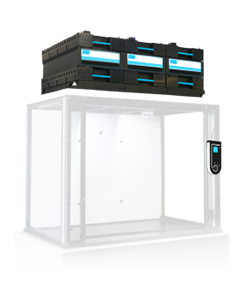
HALO mounts overhead in the operatory and across the practice, pulling procedure aerosols, particles, and lab fumes up and away from the people breathing them.
Drills, scalers, and air-water syringes turn a routine procedure into a cloud of fine aerosol that hangs in the operatory long after the patient has left the chair. Your team breathes that air all day, and your waiting room fills with whoever walked in. HALO is a dental air purifier that cleans it. Medical grade HEPA and carbon filtration mounted overhead, built on more than 50 years of Erlab laboratory work.


Medical-grade HEPA H14 filtration

99.99% viral aerosol reduction, independently tested

HEPA and carbon, for aerosols and lab fumes

One unit covers a typical operatory

Whisper quiet

Independently tested & certified
Get a quote in 1 business day.
Tell us about your practice and a specialist will get back to you with units, pricing, and all the info you need to make a smart investment.
The aerosol nobody can see hanging in the operatory
A high-speed handpiece, an ultrasonic scaler, an air-water syringe. Each one lifts a mix of saliva, blood, and water off the patient and into the air as a fine aerosol. The largest droplets settle quickly, but the fine fraction stays suspended in the operatory and drifts, and it carries whatever was in the patient’s mouth with it.
That is the air your dentists, hygienists, and assistants work in, procedure after procedure, all day. High-volume evacuation and extraoral suction capture a good share of it right at the source, which is exactly where that job belongs. What they do not catch settles into the room, where it lingers between patients and adds up over a shift.
A dental air purifier mounted overhead handles that room air. It pulls the suspended aerosol up and away from the operator and the chair, filters it, and returns it clean, working continuously through every procedure and clearing the room faster between them.
How the HALO dental air purifier works
HALO hangs from the ceiling and connects to building power overhead. No ductwork, no HVAC changes, installed in hours, room by room around your schedule.

Air is drawn upward.
Room air is pulled up into the unit, lifting aerosols and fine particles away from the operator, the assistant, and the patient in the chair below.

Medical-grade filtration.
HEPA H14 captures fine aerosols and particles at the grade used in laboratory biosafety cabinets, while carbon handles the fumes and odors that come off dental materials.

Clean air returns at the ceiling.
Filtered air rides the ceiling outward and settles back slowly, keeping the whole room turning over instead of pushing aerosol across the operatory.
A Smart-Light ring shows status at a glance, and the eGuard app gives your team remote monitoring, alerts, and filter detection. Nothing to manage chairside.

The operatory and the lab are two different air problems
A dental practice has two kinds of air to deal with, and HALO has a filter for each.
In the operatory and hygiene rooms, the concern is aerosols and fine particles from procedures. That is a job for the HEPA H14 models, which capture the suspended droplet nuclei and particles that carry bacteria and viruses.
In the dental lab, the air is full of something else entirely. Grinding, trimming, and polishing throw off fine dust, and acrylics, monomers, and solvents give off fumes and odors all day. The carbon models handle the fumes and smells, while HEPA captures the grinding dust. It is the same split Erlab has built laboratory filtration around for decades, now overhead in your lab.
Most practices run HEPA units in the operatories and hygiene area and carbon or both in the lab. We help you sort out which goes where.
The proof, in independent testing

99.99% viral aerosol reduction.
In independent ARE Labs testing, HALO cut aerosolized MS2 virus, a surrogate for influenza and SARS-CoV-2, by 99.99% within 90 minutes in a sealed bioaerosol chamber.

34 to 55% fewer particles.
In a working dialysis clinic, a single HALO filtering the room about 11 times an hour cut fine particles by 34 to 55%, measured with a calibrated counter.

Certified to ASHRAE 241.
HALO is independently tested and certified to meet the ASHRAE 241 standard for controlling infectious aerosols in occupied buildings.
Where HALO fits in a dental practice


Operatories
Where the aerosol is generated. One HALO overhead clears the room air through the procedure and faster between patients.

Open-bay hygiene and ortho
Several chairs in one shared room, all generating aerosol at once. Units scale to cover the bay evenly.

Waiting and reception
The shared room where patients sit close together, often when they are already unwell.

The dental lab
Grinding dust and the fumes off acrylics and solvents, the air problem dentistry shares with any working lab. HEPA for the dust, carbon for the fumes.

Sterilization and instrument areas
Where chemical vapors and process odors collect.

Staff and break rooms
Where your team finally takes the mask off, and wants the air to be clean when they do.
How many units does your practice need?
Coverage comes down to room volume and the air change rate you want from HALO. Each HALO HEPA unit moves about 10,590 cu ft of air per hour. Enter a room below for a quick estimate.
Single operatory
Dental lab
Waiting room
Open-bay hygiene
Room volume
3,600 cu ft
Filtered air needed
14,400 cu ft/h
HALO HEPA units
2 units
Example estimates, at the listed ceiling heights:
| Dental space | Size | Volume | Target ACH (from HALO) | HALO HEPA units |
|---|---|---|---|---|
| Single operatory (9 ft ceiling) | 120 sq ft | 1,080 cu ft | 6 | 1 units |
| Dental lab (9 ft ceiling) | 300 sq ft | 2,700 cu ft | 6 | 2 units |
| Waiting room (9 ft ceiling) | 400 sq ft | 3,600 cu ft | 4 | 2 units |
| Open-bay hygiene (9 ft ceiling) | 600 sq ft | 5,400 cu ft | 6 | 4 units |
A planning estimate for the filtered air HALO adds, on top of your practice’s ventilation. Layout, ceiling height, and how many chairs share a room all affect placement, and every order includes a coverage consultation that scopes the real number.
What to look for in air filtration for dental offices
Searching for the best air purifier for dental offices turns up a lot of floor units built for a living room. A dental practice asks more of the air than that. Here is what actually matters.

Medical-grade filtration.
There is no legal definition of a medical grade air purifier, so look at the filter. True HEPA at the H14 level, the grade used in biosafety cabinets, is what you want for procedure aerosols, not a lighter consumer filter.
It covers the operatory without taking it over.
A tight operatory has no room for a floor unit beside the chair. HALO mounts overhead, out of the way of you, the assistant, and the patient.
It runs without anyone tending it.
The best air filtration for dental offices is the kind nobody has to remember. HALO is fixed overhead and runs all day, so it cannot be unplugged for an outlet or switched off and forgotten.
It handles aerosols and lab fumes.
A complete answer for a dental office covers the operatory aerosols and the dental lab fumes and dust, which means both HEPA and carbon.
It proves it’s working.
Tie HALO into AirGradient monitoring and you can show your team and your patients the air quality, rather than just telling them.
What HALO costs to run
| Cost component | HALO dental air purifier |
|---|---|
 Electricity
|
50W per unit, about $52.60 a year each at $0.12 per kWh, running all day. |
|
Filters
|
Folded into a roughly $0.48 a day all-in operating estimate per unit, with automatic filter detection so nothing gets missed. |
 Install
|
Hangs from the ceiling and connects to power overhead. No ductwork, no construction, room by room around your schedule. |
 Chairside space
|
None. Nothing on the operatory floor, no cord, no unit to work around. |
The roughly $0.48 a day figure is an illustrative example covering electricity and amortized filters, based on published Erlab data. Real filter intervals shift with the room and how busy it is.
The questions your team will raise
| The concern | The reality | How we help |
|---|---|---|
| We already have HVE and extraoral suction. | Those capture aerosol at the source, which is exactly where they should. They do not clear the fine aerosol that escapes into the room and lingers between patients. HALO handles that room air. | A walkthrough and AirGradient data show what is left in the operatory air after source capture. |
| We have a floor HEPA unit in the op. | A floor unit eats space in a tight operatory, gets moved or unplugged, and pushes air around at head height. HALO is overhead, out of the way, and always on. | We show where one overhead unit covers the operatory better than a floor unit in the corner. |
| Will installing it disrupt the practice? | HALO mounts to the ceiling and connects to power overhead, with no ductwork or construction, so it goes in operatory by operatory around your schedule. | We schedule around your patient days and confirm placement before anything is ordered. |
| Infection control will want documentation. | HALO uses HEPA H14 filtration and is certified to ASHRAE 241, the standard for controlling infectious aerosols in occupied buildings. | A documentation pack on filtration grade, certification, and monitoring records for your infection-control protocols. |
| Does it handle the dental lab fumes and dust? | The carbon version handles the fumes and odors off acrylics, monomers, and solvents, and HEPA captures the grinding dust. | We sort out HEPA, carbon, or both for your lab based on what the room throws off. |
| What will it cost? | 50W per unit, automatic filter detection, and typically one unit per operatory. | A running-cost estimate built around your number of operatories and your lab. |
Dental air purifier
frequently asked questions
The basics
Is HALO a good dental air purifier?
It is built for the two air problems a dental practice has. In the operatory, the HEPA H14 models clear the fine procedure aerosols that hang in the room and that your team breathes all day. In the dental lab, carbon handles the fumes off dental materials and HEPA handles the grinding dust. It mounts overhead, so it covers the room without taking chairside space, and it runs all day on its own.
What is the best air purifier for dental offices?
The best air purifier for dental offices covers the operatory without crowding it, runs continuously without anyone tending it, uses true HEPA H14 for procedure aerosols, and handles the dental lab's fumes and dust as well. Consumer floor units miss on all of those. HALO mounts overhead, uses medical-grade HEPA plus carbon, and is built to run all day in a clinical space.
Is HALO a medical grade air purifier for a dental office?
There is no legal definition of medical grade, so the honest answer is in the filter. HALO uses HEPA H14, which captures 99.995% of particles at the most penetrating size, the same grade used in laboratory biosafety cabinets. For the aerosols a dental office generates, that is the filtration level worth holding out for over a lighter consumer unit.
Aerosols and the lab
Does it reduce procedure aerosols in the operatory?
It reduces the airborne aerosol load. In independent ARE Labs testing, HALO cut aerosolized MS2 virus, a surrogate for influenza and SARS-CoV-2, by 99.99% within 90 minutes in a sealed chamber. In an operatory it continuously lowers the concentration of suspended aerosol and clears the room faster between patients, rather than eliminating exposure outright.
Does it work for a dental lab as well?
Yes. A dental lab air purifier has a different job from the operatory, the dust off grinding and trimming and the fumes off acrylics and solvents. The carbon version handles the fumes and odors, and HEPA captures the dust. It is the same kind of filtration Erlab has built for working labs for decades.
Does it replace our HVE or extraoral suction?
No, and it is not meant to. Source capture at the chair is its own job and an important one. HALO handles the room air, the fine aerosol that escapes into the operatory and lingers, plus the air in the rest of the practice. The two work together.
Fit and operation
How many units does an operatory need?
Usually one. A typical operatory is covered by a single HALO overhead. Open-bay hygiene and ortho rooms with several chairs need more, scaled to the size of the room. A coverage consultation sets the number for your layout.
Is it quiet enough for the operatory?
Yes. HALO runs above the room at low noise, so it stays on through procedures without competing with chairside conversation. Confirm the published acoustic figures with your Erlab specialist.
What about air filtration for dental offices across the whole practice?
HALO scales from a single operatory to the whole office, operatories, hygiene rooms, the waiting room, the lab, and sterilization. You can mix HEPA and carbon units room by room, and a consultation maps complete air filtration for dental offices around how each space is used.
Ready to clear the air in your practice?
Tell us about your practice and we will put together a coverage plan, the right number of units, and pricing. No obligation, no sales pressure.
Typical response time, same business day.
