




Building GMP/CLIA Confidence with the Right Equipment
Audits don’t announce themselves with warning sirens. FDA inspectors show up. CAP surveyors walk your benches. State inspectors pull your logs. And in those moments, your equipment either backs up your claims or exposes gaps you didn’t know existed.
The labs that pass without drama share something in common. Their equipment generates the documentation auditors expect, automatically. No scrambling for handwritten logs. No explaining why your fume hood has no usage records. No justifying why your chemical storage has no alarm history.
Understanding what GMP and CLIA auditors actually look for in your containment and storage equipment – and why certain features matter more than others – helps you make equipment choices that support compliance rather than undermine it.
What GMP and CLIA Audits Actually Check
GMP Pharmaceutical Manufacturing (FDA 21 CFR Parts 210/211)
When FDA walks your pharmaceutical manufacturing facility, they’re validating that your process controls actually control the process. For containment equipment, auditors focus on several areas.
Environmental monitoring and control.
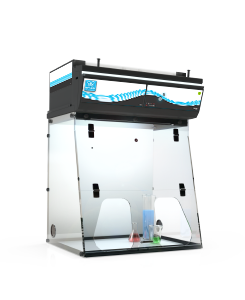
Your fume hoods and storage cabinets exist within a larger environmental control system. Auditors verify that you’re monitoring the things that affect product quality – air quality, temperature, humidity – and that you respond when parameters drift. If your ductless fume hood claims to maintain a certain face velocity, you need continuous monitoring and records proving it did.
Equipment qualification and validation.
IQ (Installation Qualification), OQ (Operational Qualification), and PQ (Performance Qualification) aren’t optional. Auditors will ask for documentation proving your equipment was installed correctly, operates as specified, and performs consistently over time. For ductless systems, that includes ASHRAE 110 containment
Preventive maintenance and calibration.
You need scheduled maintenance with completion records. Filter change dates, calibration certificates for sensors and alarms, corrective actions when equipment fails checks. If your fume hood monitor says the filter is saturated, auditors want to see that you changed it and documented why, when, and who validated the replacement.
Deviation and CAPA systems.
When equipment alarms trigger or parameters fall out of range, auditors look for investigation records, root cause analysis, and corrective actions. A fume hood that logged 15 face velocity alarms last month without documented investigation is a finding waiting to happen.
GMP Pharmaceutical Manufacturing (FDA 21 CFR Parts 210/211)
When FDA walks your pharmaceutical manufacturing facility, they’re validating that your process controls actually control the process. For containment equipment, auditors focus on several areas.
Quality control and quality assurance.
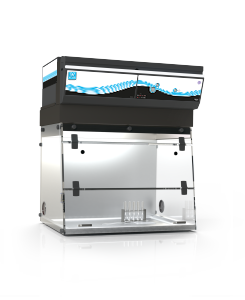
For PCR workstations and ductless hoods handling patient specimens, contamination control is everything. Auditors verify that you have procedures preventing cross-contamination, that your equipment supports those procedures (UV decontamination, HEPA filtration with documented efficiency), and that you monitor for contamination events.
Proficiency testing and competency.
Staff must demonstrate competency using the equipment correctly. That means documented training on proper fume hood technique, understanding alarm responses, and following contamination control procedures. Your equipment’s training documentation becomes part of personnel files.
Specimen integrity and chain of custody.
Chemical storage and containment equipment must protect reagent and specimen integrity. Temperature logs for refrigerated storage, contamination monitoring for workstations, and documented procedures for handling hazardous materials all fall under this umbrella.
Records and documentation.
Clinical labs live and die by records. Usage logs, maintenance records, alarm histories, calibration certificates, and training documentation must be complete, contemporaneous, and traceable. Electronic logs are acceptable – handwritten logs are acceptable – but gaps are not.
Equipment Features Auditors Notice (And Why They Matter)
Walk into an audit with equipment that can’t produce records, and you’re explaining deficiencies before you discuss your science. The features below aren’t nice-to-haves. They’re the difference between documentation you can hand over immediately and documentation you can’t produce.
Automatic, Continuous Monitoring
- Face velocity monitoring with alarms. ANSI/ASSP Z9.5-2022 requires face velocity monitoring for ductless fume hoods. Auditors expect to see continuous monitoring with high/low alarms, not quarterly checks with a handheld meter. Equipment with integrated anemometers that log velocity in real-time – and alert when airflow drops below safe minimums – satisfies this requirement automatically.
- Filter saturation detection. Breakthrough is a safety event and a documentation event. Auditors want proof that you knew when filters approached saturation and that you replaced them before safety margins eroded. Systems with automatic detection (like MoleCode sensors for chemical breakthrough or differential pressure monitoring for particulate filters) create that proof without relying on staff to remember manual testing schedules.
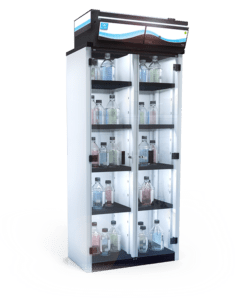
- Temperature and humidity logging. Environmental conditions affect both equipment performance and product stability. Integrated temperature and humidity sensors with continuous logging demonstrate environmental control. When an auditor asks about storage conditions for temperature-sensitive reagents in your chemical storage cabinet, pulling up six months of temperature logs takes seconds – if your cabinet actually records them.


Traceability and Audit Trails
- Electronic logs with timestamps. Systems like Erlab’s eGuard platform create tamper-evident electronic records of every alarm, every parameter excursion, every filter change, and every usage period. Auditors trust electronic logs more than handwritten logs because timestamps are automatic, entries can’t be backdated, and gaps are obvious.
- Filter identification and usage tracking. When you replace a filter, can you prove which filter was installed, when it was installed, who installed it, and what chemical list it was validated for? Equipment with automatic filter recognition (RFID tags or embedded identification) eliminates the “I think we changed it in March” problem.
- Remote monitoring and alerts. Auditors like systems that notify multiple people when alarms trigger. A hood that sends alerts to your phone, your supervisor’s phone, and your quality manager’s email creates a notification record proving someone was alerted in real-time. That’s more defensible than relying on someone walking past and noticing a flashing light.
Validation-Friendly Design
- ASHRAE 110 compliance. GMP facilities often require ASHRAE 110 containment testing during equipment qualification and periodically thereafter. Ductless fume hoods designed for ASHRAE 110 testing (with appropriate access ports, uniform airflow patterns, and documented face velocity specifications) pass testing without modifications or excuses.
- AFNOR NF X 15-211 certification. This French standard is the most stringent molecular filtration standard globally, requiring exhaust concentrations below 1% of TLV under normal operation. While not explicitly required by FDA or CLIA, AFNOR certification provides third-party validation of filtration performance that auditors respect. When an inspector asks how you know your filters work, pointing to AFNOR certification ends the conversation.
- Documented chemical compatibility. Can you produce a list of every chemical your fume hood was validated for, with retention capacities and projected filter life? Labs with documented chemical lists and filter specifications (ideally provided by the manufacturer as part of an eValiQuest analysis) answer this question immediately. Labs guessing about filter compatibility get deficiency citations.


Fail-Safe Design and Alarm Systems
- Multi-level alarms with distinct notifications. Equipment should distinguish between “filter approaching saturation” and “filter saturated – stop work immediately.” Different alarm types (visual indicators, audible alerts, remote notifications) ensure staff can’t miss critical warnings. Auditors look for evidence that alarms actually changed behavior – work stoppages, corrective actions, documented investigations.
- Automatic shutdowns for critical failures. Some failures require stopping work, not just alerting staff. Face velocity below minimum safe levels, filter breakthrough detected, or fan failure should trigger automatic shutdowns or lockouts preventing further use until corrective action is complete. This protects both staff and product integrity.
- Redundant safety systems. Backup filters, multiple sensors for critical parameters, and fail-safe designs that maintain protection even during component failures demonstrate engineering rigor auditors appreciate.
Common Audit Pitfalls and How to Avoid Them
Pitfall – “We test it quarterly”
The problem.
Quarterly verification of face velocity or filter saturation doesn’t prove the equipment worked safely between verifications. If your last check was three months ago and an auditor finds the fume hood alarm logged 47 low-velocity warnings last week, you’ve documented that you ignored safety alarms for a week.
The fix.
Continuous monitoring with automatic logging. Real-time data demonstrates continuous compliance, not snapshots. If you’re stuck with equipment that lacks continuous monitoring, implement daily checks with documented results – but recognize that continuous monitoring eliminates this vulnerability entirely.
Pitfall – Handwritten logs with gaps
The problem.
Handwritten maintenance logs inevitably have gaps. Vacations, sick days, forgotten entries, illegible handwriting, and lost notebooks create documentation nightmares during audits.
The fix.
Electronic logging systems that capture data automatically. eGuard-style platforms log every alarm, every parameter, and every event without requiring staff to remember. When handwritten logs are unavoidable (equipment that pre-dates electronic monitoring), implement cross-checks where two people verify entries or where electronic systems validate manual logs.
Pitfall – No documented training on equipment alarms
The problem.
Staff who don’t understand alarm meanings respond incorrectly or ignore warnings. During an audit, when an inspector asks “what do you do when this alarm sounds?” and gets five different answers from five technicians, you’ve exposed a training gap.
The fix.
Documented training on every alarm type, what it means, and what actions are required. Include training documentation in personnel files and link it to equipment-specific procedures. When you upgrade or add equipment, train immediately and document that training before anyone uses the equipment.
Pitfall – Filter changes without documentation
The problem.
You changed the filter last month. Who changed it? What was the old filter’s saturation status? What chemical list is the new filter validated for? How did you verify the new filter was installed correctly? Without documentation, you can’t prove any of this happened.
The fix.
Filter change procedures with mandatory documentation. Before removing the old filter, record saturation monitoring data. During installation, verify the new filter’s specifications match your chemical list. After installation, verify airflow and alarm functionality. Document all of it with signatures, dates, and verification data. Better yet, use equipment with automatic filter recognition that logs filter installation automatically.
Pitfall – Deviations without investigation
The problem.
Your fume hood logged an alarm. What happened next? If the answer is “nothing” or “we reset it and kept working,” you’ve created a compliance problem. Every alarm represents a potential safety event or environmental excursion requiring investigation.
The fix.
Deviation procedures that trigger automatically when alarms occur. Minor alarms might require simple documentation (“pre-filter saturation, replaced per schedule”). Major alarms require root cause analysis and corrective action. The key is consistency – every alarm gets documented with investigation results, even if the investigation is “sensor failure, replaced sensor.”
Pitfall – Equipment purchased without validation planning
The problem.
You bought a ductless fume hood that can’t be validated to your requirements. No access ports for ASHRAE 110 testing. No documentation of filter validation. No electronic logging capability. Now you’re facing an audit and your equipment can’t generate the documentation required.
The fix.
Qualification and validation planning before purchase. Define your documentation requirements, identify the standards you must meet (ASHRAE 110, ANSI/ASSP Z9.5, AFNOR if relevant), and verify the equipment can meet those requirements before purchase. Work with manufacturers who provide validation support, IQ/OQ/PQ documentation, and commissioning services as part of the purchase.
Pre-Audit Equipment Walkthrough
Use this template two weeks before any scheduled audit. Walk every ductless fume hood and chemical storage cabinet in your facility and verify each item.
Documentation Verification
 Electronic logs accessible and complete for past 12 months (or since installation if newer)
Handwritten logs (if used) complete with no gaps, countersigned where required
All alarm events in past 12 months documented with investigation results
Filter change records complete with dates, filter specifications, and verification data
Calibration certificates current for all sensors and monitoring systems
IQ/OQ/PQ documentation accessible and complete
Equipment Status
All filters within service life with documented remaining capacity
Face velocity within specified range, verified by integrated monitoring system
All alarms functional – test each alarm type and verify response
Temperature and humidity within specified ranges for storage cabinets
UV lamps (PCR workstations) within service life with documented operation hours
No physical damage, unusual odors, or visible contamination
Equipment identification labels legible with current calibration/service dates visible
Operational Readiness
All staff trained on equipment operation with training documented in personnel files
All staff trained on alarm responses with documented competency verification
SOPs current and match actual equipment operation
Chemical lists match equipment validation (for ductless fume hoods)
Storage inventory matches capacity and compatibility specifications (for storage cabinets)
Preventive maintenance current with all scheduled tasks completed
Common Questions – Rehearse Answers
“How do you know this equipment is working correctly right now?”
“When was the last time this alarm triggered and what did you do?”
“Show me filter saturation monitoring for the past six months”
“What happens if face velocity drops below minimum?”
“How do you verify filter compatibility with your chemicals?”
What Happens When Equipment Can’t Produce Records
When an auditor asks for documentation and you can’t produce it, here’s what follows.
Observations and deficiencies.
Minor documentation gaps result in observations requiring corrective action plans. You’ll document what went wrong, why it went wrong, and how you’ll prevent it from happening again.
Warning letters.
Repeated or serious documentation gaps trigger FDA warning letters for GMP facilities or sanction recommendations for CLIA labs. You’re now on a public list of labs with compliance problems.
Suspension or revocation.
Severe compliance failures result in manufacturing shutdowns for pharma facilities or CLIA certificate suspension for clinical labs. You stop operating until you fix the problems and demonstrate sustained compliance.
Financial consequences.
Audits that find problems cost money. Corrective action plans, equipment upgrades, additional testing, and follow-up inspections consume resources. Lost production time, delayed product releases, and reputational damage cost more.
The equipment investment that prevents these consequences is substantially cheaper than remediation after findings.
Buy Equipment That Documents Itself
The labs passing audits without drama made specific equipment choices. They chose ductless fume hoods with integrated monitoring, automatic logging, and continuous compliance documentation. They chose chemical storage cabinets with temperature logging, alarm histories, and electronic records. They chose manufacturers who provide validation support, IQ/OQ/PQ documentation, and commissioning services.
This doesn’t eliminate audit prep. You still need procedures, training, and competency verification. But equipment that documents itself eliminates the “we think it worked but we can’t prove it” problem that creates audit findings.
When the FDA inspector asks how you know your fume hood maintained face velocity during last Tuesday’s critical compounding operation, you pull up electronic logs showing minute-by-minute airflow data, alarm status, and filter saturation levels. When the CAP surveyor asks about your chemical storage temperature control, you show six months of continuous temperature logs with every excursion documented and investigated.
Equipment does what equipment should do – it generates the proof that supports your claims.
GMP and CLIA compliance starts with processes, training, and quality systems. But it ends with equipment that can prove it did what you said it did. Every day. All year. Without gaps.
