



Introduction
Lab manager Jennifer, introduced innovative safety measures and energy saving equipment for the protection of her colleagues and saved 70% on the lab’s energy expenditure while also saving 48% in expenses that would have otherwise required complete facility renovations.

As a lab manager, one of Jennifer’s key responsibilities is ensuring the safety of her team members. It stands to reason that this is a tremendous undertaking and a very serious responsibility.
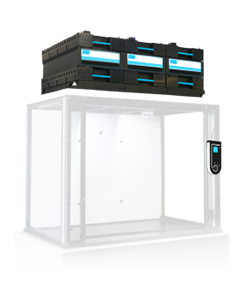
While not all labs need chemical fume hoods, Jennifer’s application handlings do require the additional protection with engineered controlled systems such as fume hoods to keep hazardous vapors of chemical emissions away from the breathing zone of occupants present in the lab and those performing the handlings. At times, she also needs to perform sensitive weighing of certain API’s and needs to ensure the stability of her samples, as well as protection from particles generated during the weighing of solid dose API’s. This is typically a handling that needs to be performed in a completely separate containment ventilated enclosure (CVE) or powder weighing enclosure due to the additional stability required when weighing down to precise measurements. While there are currently some ducted fume hoods in place, the growing lab needs to add a number of hoods for their expanding workforce to meet the demands of their research programs. The dilemma Jennifer is faced with is the cost associated with adding hoods and the facilities current air handling capacity limits.
Simply adding one ducted fume hood would cost over $50,000 in order to add the necessary HVAC, and new air handling unit, which will come with the additional expense of rebalancing the room air.
Additionally, the facilities department is complaining about the increase in cost due to the increased energy load this will have on the building, which does not help with their current sustainability efforts and will put their efforts to reduce their carbon footprint at risk.
With all this in mind, serious consideration has to be given to low energy, efficient, flexible solutions that include sustainable processes such as a low carbon footprint that promotes a clean indoor and outdoor environment. Jennifer knows that this strategy will score points for the lab’s reputation and include a sizable return on capital investment.
Jennifer is determined to find new solutions for her lab that will satisfy all safety, budget, and environmental concerns.
Her aim is to answer 4 questions:
-
How can I prevent vapors and other dangerous fumes from ever reaching the breathing zones of my staff, as well as unprotected skin and clothing areas?
-
I need to add controlled devices that keep our products protected from ambient pollution. Is this possible?
-
How can I ensure that toxic vapors and chemicals are being contained and not vented to pollute our community air?
-
How can I ensure that throughout the extensive everyday handling of chemicals these dangerous solutions are being securely stored using a filtration process that will capture all fumes?

With safety issues that required better solutions, and an approval process that needed data and guidance to pass muster, Jennifer created a research report to share with her team, colleagues, board members, and facility manager. She spent the better part of the day in her office researching articles, websites, and scientific papers, as well as interviewing colleagues in similar professional roles. This is Jennifer’s report on what exists in her lab today and how it can be improved to meet all her suggested goals for safety, budget, and the environment.
Jennifer’s Research Report
(Submitted to the board, March 11, 2021)
Our Safer, Greener, Laboratory of the future is now.
Our existing laboratory is a true energy, economic, and expansion burden.
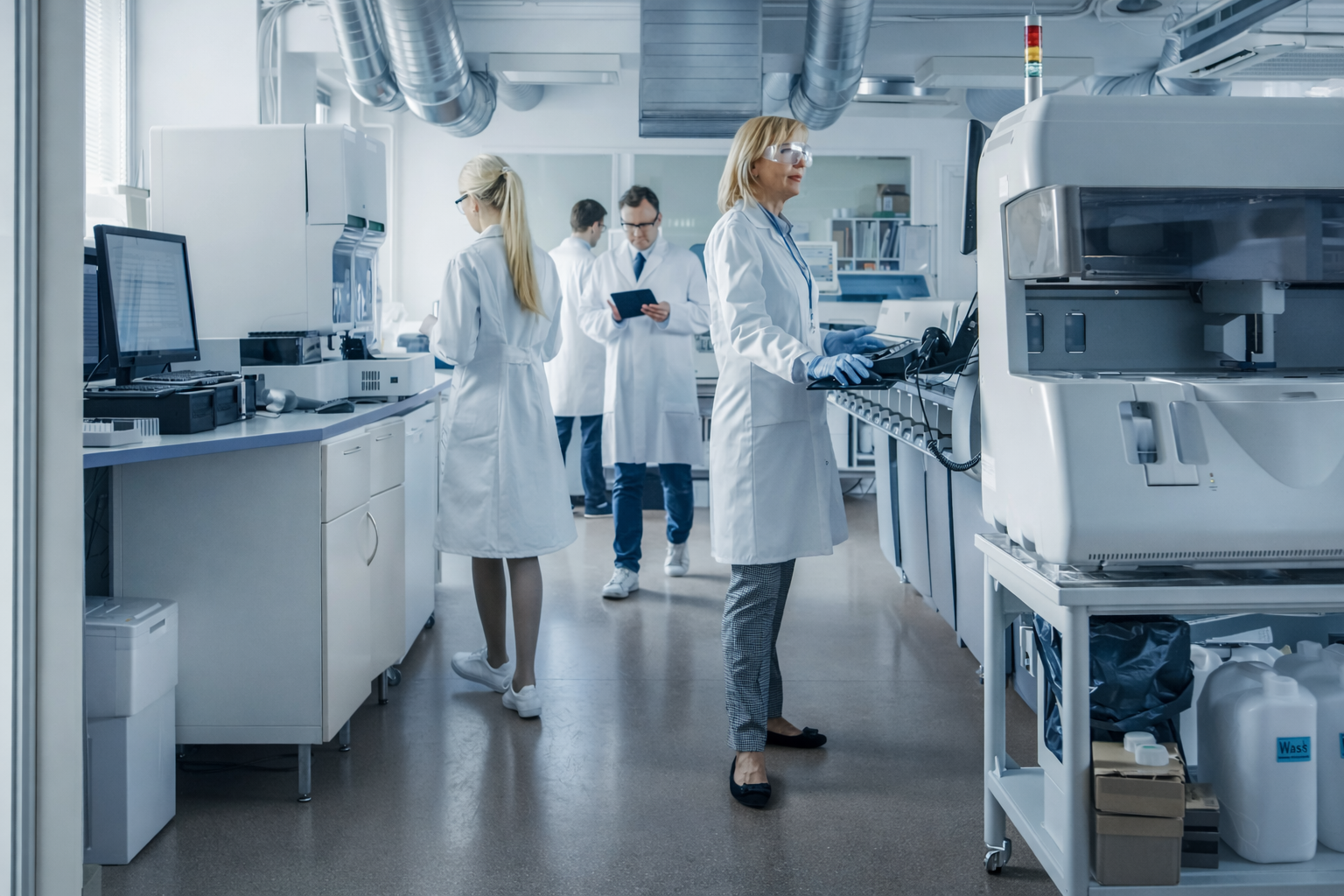
Research shows that laboratories use far more resources than any other building or facility, making them one of the largest energy-consuming sectors in the country. On average, a typical laboratory burns through five to ten times more energy per square foot than offices, an impact that may be intensified tenfold for clean rooms and specialized facilities.
For instance, 44% of the energy used by Harvard University is from its laboratories, which take up less than a quarter of campus space.
For decades laboratory spaces have relied heavily on complex and large ventilation systems to operate. For this type of workspace, the primary functions of ventilation systems are to provide safe, comfortable, breathable environments for all lab users, and to minimize exposure to hazardous air contaminants. It means that laboratories should have mechanically generated supply air and exhaust air.
All lab rooms use 100% outside air which must be heated or cooled for comfort before it is brought into the lab and then exhausted back to the outside. Lab building ventilation rates are particularly high, somewhere between four to twelve Air Changes per Hour (ACH). ACH is the total times the air is changed over per hour. Simply put, air changes per hour are the number of times you change over the total volume of air in your room or space. This means that, when using ducted fume hoods, every hour, the entire volume of air in a laboratory is completely replenished with clean air four to twelve times at a minimum, requiring a tremendous amount
of energy.
For example, if a 900 sq’ lab with twelve ducted hoods needs to achieve ~ 4 ACH, they will need a minimum of 1,500 CFM of supply air, or 100% outside air (OA), with 1,800 CFM of exhaust air. These minimums are based on a VAV system which reduces the cfm pull from each fume hood, based on sash height and provides an example of all sashes close, with a minimum cfm of 150, per hood. However, as the sashes are opened, the CFM is dramatically impacted with a total max CFM of supply air increasing to 8,700 CFM, and to 9,000 CFM at the exhaust.
If the same lab was to use eleven filtered fume hoods while keeping only one ducted fume hood the max CFM requirements would be reduced by 66%, achieving a very controlled 4 ACH during unoccupied hours, and 8 ACH when occupied.


The Case Against Exclusive Use Of Ducted Hoods Currently Used In Our Lab
Ducted fume hoods are a central component of the ventilation in a laboratory, increasing the amount of air needed for a facility. They are the standard engineering control devices for protecting laboratory personnel when working with hazardous and/or toxic chemicals, and one of the most energy intensive aspects of a laboratory operation. It is now well-known that one ducted fume hood can consume as much energy as three to four homes in the US, an unacceptable carbon footprint.
| California Lab Equipment Estimates | Equipment Density (Units/LAB) | Approx. Number (Thousand units) | Est. Energy Consumption (GWH/YR) |
|---|---|---|---|
| -80 Freezer | 2.9 | 58 | 228-648 |
| -20 Freezer | 3.7 | 74 | 126-363 |
| Refrigerator | 3.7 | 95 | 19-254 |
| Fume Hood* | 3.0 | 60 | 661-1322 |
| Fluo Micro | 1.7 | 32 | 6-12 |
| Centrifure | 3.8 | 76 | 12-227 |
| Water Bath | 2.6 | 52 | 115-201 |
| Heat Block | 3.0 | 60 | 15 |
| PCR Machine | 2.2 | 44 | 35 |
| Incubator | 3.0 | 60 | 41-524 |
| Shaker | 1.2 | 24 | 53 |
| Autoclave | 0.8 | 16 | 26-527 |
| Vac Pump | 2.1 | 42 | 1-115 |
| TC Hood | 1.7 | 34 | 106-235 |
| * HVAC electricity consumption due to fume hoods | |||
Source: My Green Lab (2016 Presentation)
It logically follows that the amount of energy needed is greatly augmented in spaces with multiple ducted fume hoods, generally called hood intensive laboratories. The energy required to condition the air is just a part of the big picture, a significant amount of additional electricity is required to run large fans to move the air through the building and through the fume hoods.
Laboratory ventilation and ducted fume hoods are costly to run, especially when one needs to heat or cool the air supply in the room. Today, heating, ventilation and air conditioning (HVAC) account for more than half of the energy consumption in most laboratories.
According to a report from Louis Stokes Laboratories, 66% of the energy used in their labs is directly related to ventilation and cooling

Figure 1. Annual electricity use in Louis Stokes Laboratory, National Institutes of Health, Bethesda, MD
Recently, new stringent regulations have increased the overall complexity and therefore the footprint of laboratory ventilation in a building. Add to this the fact that as building use changes over time ducted fume hoods remain inflexible and unable to meet the renovation challenges without costly upgrades to the HVAC system.
Adding To An Already Large Carbon Footprint
Not only do ducted fume hoods consume large amounts of energy, but laboratories also pollute the environment by continuously exhausting harmful and toxic chemicals. The same chemicals, which are deemed dangerous in our working spaces, are inevitably pushed into the atmosphere every second laboratory ventilation is used. Thus the uncomfortable paradox of laboratories in our modern society
Jennifer’s Recommendation – Embrace The Big (Clean Air) Picture
In 2021 and beyond we should no longer release pollution into the air. All laboratories should be using filtration to capture chemicals, biological and particulate pollution at the source, releasing only pure air back into the lab and exhausting nothing to the outside environment. Through extensive research I have come to the conclusion that air purification and filtration are the best solution to my quest for the safest lab equipment that meets budgetary guidelines, while reducing our carbon footprint.
”My recommendation -
Erlab filtration is the best system for capturing inside contaminated lab air without exhausting and polluting the outside environment. Feel free to investigate the extensive benefits this holds for both researchers and the environment at Erlab
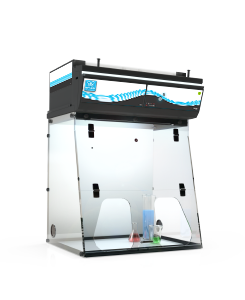
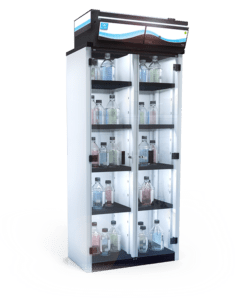
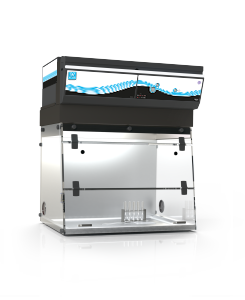
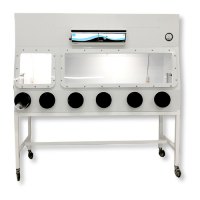
I submit to you that their over 50 years of expertise in the research and development of air filtration for protection against VOCs, virus and bacterial pollutants is second to none. Both our facility manager Charlie, and I, love the ability to set up, plug in and get to work, with no HVAC renovations or major interruptions in our project schedule. I am confident the board will approve of the savings in energy we will realize, as well as our contribution to a ‘greener community’ environment. One of my favorite caveats to Erlab’s products is the option to easily move them to different areas in our lab to suit the type of research we are doing at the time. This type of flexibility will increase our efficiency. By way of further explanation, and as I believe that chemical/particulate air filtration is the key to safety in our lab and a safeguard for our community, I was most impressed by the fact that at the heart of every Erlab product is the most powerful activated carbon filter available on the market today. My research confirms that this innovative filter technology is the nucleus and differentiating factor separating Erlab from all competitors in this space. I am including photos of the items I have selected to demonstrate the quality built into these filtration systems.
Jennifer’s Questions Answered
In the beginning of this narrative Jennifer posed 4 questions she needed answers to, in order to protect her lab team from the most common hazards experienced in typical labs. Below are the solutions she decided on and included in her report.

Question 1:
How can I prevent vapors and other dangerous fumes from ever reaching the breathing zones of my staff, as well as unprotected skin and clothing areas?
Solutions:
Erlab filtering ductless fume hoods and Erlab secure weighing stations. They will be a benefit to my team members performing chemical handlings. It will allow my team to stay focused on their tasks knowing that all toxic gases, particles and CMR substances are instantly drawn up and into the unit’s filters before any dangerous or toxic fumes reach the critical breathing zone, clothing, or skin. As an additional benefit each filtering fume hood has 7 different models and each weighing station has 4 convenient models to choose from.

Question 2:
I need to add controlled devices that keep our products protected from ambient pollution. Is this possible?
Solutions:
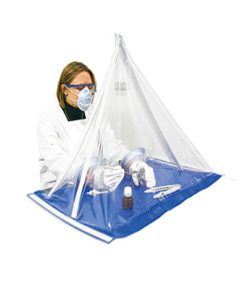
The best systems I found for our projects that require protection from pollution and dust are the Erlab PCR workstations and Clean Air enclosures. Erlab PCR workstations are fitted with a highefficiency filtration system (HEPA/ULPA U16) which will keep our work area particle-free and prevents any pollution from reaching our handling operations. A UV lamp also decontaminates the work surface and prevents biological cross contamination between two operations. There is even an optional molecular filter that can protect handling operations from VOCs present in the laboratory atmosphere, while this was not my primary concern, the added layer of carbon filtration really peaked my curiosity of how VOC’s could impact our final product. There are also clean air enclosures fitted with highefficiency HEPA H14 (or ULPA U16) filters, and an optional carbon filter for optimal protection from particulate and ambient contamination providing an ISO class 5* working environment, according to the EN ISO 14644-1: 2015 standard, which will meet my need.

Question 3:
How can I ensure that toxic vapors and chemicals are being contained and not vented to pollute our community air?
Solutions:
Erlab filtration captures chemical, biological, and particulate pollution at the source and immediately traps it in a filter which is perfectly suited for our type of research. There are no vapors or chemicals escaping to the outside environment – ever! Although this is true of all Erlab filtration products, we liked the added air filtration security that their Halo air purification system provides. This robust air purification product is mounted on the ceiling, so it takes up no floor space. The Halo will also serve to improve our indoor air quality by removing viruses, bacteria, and environmental pollution (PM2.5). Additionally, the Halo will also increase our facilities ACH without the cost of upgrading our HVAC system. This increase of ACH is also coupled with an overall improvement to our ventilation effectiveness, which will eliminate dead zones, or areas where air movement was not balanced properly within our facility. Charlie, the facilities manager, has suggested it would be invaluable in our cafeteria, conference rooms, and staff lounge as well as our lab, especially as the lab teams are all returning soon to their onsite lab schedules.

Question 4:
How can I ensure that throughout the extensive everyday handling of chemicals these dangerous solutions are being securely stored using a filtration process that will capture all fumes?
Solutions:
With Erlab’s filtering chemical storage cabinets our solutions will be close at hand while keeping our lab areas free from any pollution, vapors, and escaping odors. This area was of great interest to me, not only because it is the most effective protection for my team against breathing chemical fumes we encounter daily, but also because of the built in SMART technology that offers safety features like a ‘prolonged open door’ alert, and user friendly, intuitive operations with a highly efficient lightbased interface for visual clues to operational status. We are looking forward to having our lab air fresh 24/7. There are also 4 convenient filtration cabinet options to choose from and we are particularly interested in the filtering storage cabinet that can fit under our existing lab benches, which we expect will be a big time-saver.

Heading Home Happy
Jennifer stretches and reaches to turn off her desk light, smiling at the hiking photo of her happy family on her desk, content to know that today she has done some of her best work. Jennifer has presented her research and findings and is satisfied she has found the best solutions to not only motivate her team, by showing she cares about their health and well-being, but also happy in the knowledge that she has fulfilled an important responsibility to her colleagues, management, and her community. Her carpool buddy pops in the door indicating they are ready to go home and as Jennifer slides in she starts planning the next family hike and picnic on her phone.
