



Anyone who’s work involves the management or the handling of chemicals in a laboratory setting knows that not all risks can be eliminated but there are reasonable measures that can be adhered to in order to minimize the risks and enhance laborato- ry safety.
Laboratory professionals who are exposed to chemical vapors, multiple times a day, may not have considered what percentage of noxious fumes are invading the air they breathe while at work, and beyond. While some vapors are obviously vile, others may be creating an unhealthy, odorless contamination of the air being breathed. There is also the concern that these toxic substances are going home with you through evaporation on your skin and clothing that may not be discernible but have the potential to sicken you and those you live with.
Assessing the danger
Whether you are a lab technician, chemist, department head or supervisor tasked with maintaining healthy working conditions for staff, there are a number of steps that can be taken to ensure all hazards are defined and eliminated. Introducing control measures, such as air purification to contain polluted air, should follow a complete examination that includes:
- A determination of the physical state of the toxic material (paste, powder, liquid)
- The toxicity relevant to the substance (ex. LD50, LC50)
- The chemical properties of the substance (vapor pressure, odor threshold, boiling point etc.)
- Potential health effects (negative reproduction effects, eyes, nose, skin irritations)
- Discovering the potential routes of exposure (route of escaping fume, inhalation, skin absorption)
- The amount of chemicals being used as well as the size and layout of the room(s)
- How the material is being handled, how often, where is it being stored

Storing chemicals safely
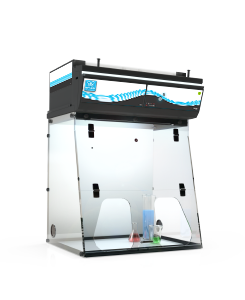
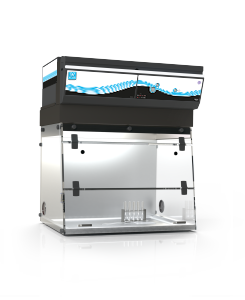
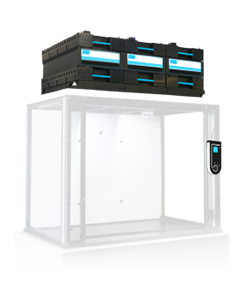
Performing an assessment of how the toxic chemicals are stored, used, handled, and disposed of will be the best way to find out if existing ventilation or other hazard control measures are adequate. Research will recommend that all airborne contaminates can be eliminated with flexible, ductless filtering chemical fume hoods and ceiling air filtration stations. This combination ensures complete purification of contaminated air throughout the entire laboratory by drawing the noxious odors away from people in the work area and returning purified air to the lab space. These ductless filtering chemical fume hoods are also more flexible, economical, and easier to install, as there are no HVAC alterations needed. Keep in mind that not all applications are suitable for a ductless fume hood which is why it is so important to speak to an expert and have a chemical assessment completed before making a choice.

Containing vapors throughout the process

A major source of toxic vapor spread is in the handling and storing of chemicals. The following recommendations should be adhered to for safe chemical storage in general:
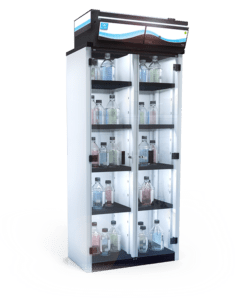
- Ensure that the storage area/cabinet/unit is out of direct sunlight and ventilation is internal (through self-contained filtration) which will prevent vapors escaping every time materials are taken out to use or put away to store.
- All toxics should be stored away from any processing or handling areas, as well as eating areas or places where protective equipment is stored.
- Ensure that emergency eye-wash and shower stations are ready and nearby
- The storage area should be fire-resistant and made with non-combustible materials
- Fire extinguishers and suitable spill clean-up equipment should be nearby and available
Finding a healthy solution
When researching chemical storage products remember to include options that will protect everyone in the lab environment against chemical inhalation in the use, handling, and storage of the chemicals. Consider using ductless filtering chemical fume hoods and laboratory storage systems as they are safe, convenient, easy to install and maintain, and do not require costly HVAC changes to infrastructure. In addition to the many models available to choose from, existing safety cabinets can be equipped with innovative filtration units for the added benefit of keeping the lab environment free of toxic chemical vapors.

