


PROTECT YOUR MOST-AT-RISK RESIDENTS
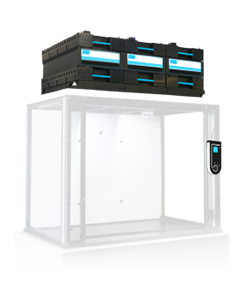
HALO brings lab-grade HEPA filtration to long-term care and senior living, mounted overhead in the rooms where residents spend their days and nights.
Older adults in long-term care and senior living are among the most vulnerable to airborne respiratory illness, and they spend most of their time breathing shared facility air. HALO is a medical grade air purifier that filters that air continuously, ceiling-mounted HEPA H14 built on more than 50 years of Erlab laboratory work, protecting residents without anyone having to manage it.


Medical-grade HEPA H14 filtration

99.99% viral reduction, independently tested

Built for the most vulnerable residents

Trusted by long-term care around the world

Nearly silent

Overhead, out of reach
Get a quote in 1 business day.
Tell us about your community and an expert will get back to you with the details you need.

What is a medical grade air purifier?
There is no single legal definition of a medical grade air purifier, so it’s important to look past the label and at the filter. What earns the name is true HEPA filtration at the H13 to H14 level, the grade hospitals rely on.
HALO uses HEPA H14, which captures 99.995% of particles at the most penetrating size, the same grade built into the biosafety cabinets that contain live pathogens in laboratories. That covers the fine aerosols that carry respiratory viruses, along with bacteria, mold, and allergens. For a population as vulnerable as long-term care residents, that is the standard worth holding out for, not a consumer unit with a lighter filter and a louder fan.
How the HALO medical grade air purifier works
HALO hangs from the ceiling and connects to building power overhead. No ductwork, no HVAC changes, installed in hours, room by room around your schedule.

Air is drawn upward.
Room air is pulled up into the unit, lifting aerosols and fine particles away from residents who are seated, resting, or in bed below.

Medical-grade filtration
Air passes through HEPA H14, the same filter grade used in biosafety cabinets, or carbon where odors in common areas and resident rooms are the concern.

Clean air returns at the ceiling.
Filtered air rides the ceiling outward and settles back slowly, keeping the whole room turning over instead of pushing air across it at seated height.
A Smart-Light ring shows status at a glance, and the eGuard app gives your nursing and facilities teams remote monitoring, alerts, and filter detection. Nothing for staff or residents to manage.
The proof, in a lab and in a clinic full of vulnerable patients
99.99% viral reduction.
In independent ARE Labs testing, HALO cut aerosolized MS2 virus, a surrogate for influenza and SARS-CoV-2, by 99.99% within 90 minutes in a sealed bioaerosol chamber.

34 to 55% fewer particles.
In a working dialysis center, treating some of the most vulnerable patients there are, a single HALO filtering the room about 11 times an hour cut fine particles by 34 to 55%.

Certified to ASHRAE 241.
HALO is independently tested and certified to meet the ASHRAE 241 standard for controlling infectious aerosols in occupied buildings.
Where HALO fits in a senior living community


Dining rooms
Every resident, three times a day, in one shared room. The single most concentrated place for shared air in the building, and the clearest case for overhead filtration.

Activity and common rooms
Where residents spend their afternoons together. Continuous filtration keeps the air cleaner through every hour they are in there.

Resident rooms
Where residents sleep and rest for the largest share of the day. Quiet enough to run overnight without disturbing them.

Therapy and rehab spaces
Shared equipment, close contact, residents working hard and breathing harder.

Reception and family areas
The first air a visiting family breathes, and the impression the building makes on a tour

Staff areas and nurse stations
The caregivers who are there every shift, breathing the building all day.

A safer and fresher building
Families notice the air the moment they walk in for a tour. The carbon version of HALO handles the odors that build up in common areas and resident rooms, the everyday reality of congregate living, so the building smells cared for rather than institutional. It is a quieter benefit than infection control, but it shapes how residents feel about where they live and how families feel about leaving someone there.
How many units does your community need?
Coverage comes down to room volume and the air change rate you want from HALO. Each HALO HEPA unit moves about 10,590 cu ft of air per hour. Enter a room below for a quick estimate.
Resident room
Activity or common room
Dining room
Large great room
Room volume
9000 cu ft
Filtered air needed
36,000 cu ft/h
HALO HEPA units
4 units
Example estimates, at the listed ceiling heights:
| Community space | Size | Volume | Target ACH (from HALO) | HALO HEPA units |
|---|---|---|---|---|
| Resident room (9 ft ceiling) | 200 sq ft | 1,800 cu ft | 4 | 1 unit |
| Activity or common room (9 ft ceiling) | 600 sq ft | 5,400 cu ft | 4 | 3 units |
| Dining room (9 ft ceiling) | 1,000 sq ft | 9,000 cu ft | 4 | 4 units |
| Large great room (10 ft ceiling) | 2,000 sq ft | 20,000 cu ft | 4 | 8 units |
A planning estimate for the filtered air HALO adds, on top of your community’s ventilation. Layout, ceiling height, and how the room is used all affect placement, and every order includes a coverage consultation that scopes the real number.
Proof families and surveyors can both see
Clean air is easier to trust when you can show it. Erlab AirGradient monitors track particulate, VOCs, CO2, temperature, and humidity in real time, and the Indoorcare dashboard turns it into something you can put in front of an infection preventionist, a state surveyor, or a family on a tour.

Step 1
Assess
Place AirGradient monitors in dining rooms, common areas, and resident wings, and see what the air is doing through a full day.

Step 2
Address
Put HALO units where the data and the resident flow point, ceiling-mounted and always on.

Step 3
Assure
The Indoorcare dashboard keeps a continuous record for infection control, surveys, and the families deciding whether to trust you with someone they love.
What HALO costs to run
| Cost component | HALO medical grade air purifier |
|---|---|
 Electricity
|
50W per unit, about $52.60 a year each at $0.12 per kWh, running around the clock. |
|
Filters
|
Folded into a roughly $0.48 a day all-in operating estimate per unit, with automatic filter detection so nothing gets missed. |
 Install
|
Hangs from the ceiling and connects to power overhead. No ductwork, no construction, room by room, around your residents' routine. |
 Disruption
|
Goes in without displacing residents or shutting down a wing. |
The roughly $0.48 a day figure is an illustrative example covering electricity and amortized filters, based on published Erlab data. Real filter intervals shift with the space and how busy it is.
The questions your team will raise
| The concern | The reality | How we help |
|---|---|---|
| We already have HVAC. | HVAC exchanges air over time. It was not built to pull fine particles and viruses out of the dining room at the moment every resident is in it. HALO adds that filtration where residents gather. | A walkthrough and AirGradient data show what your ventilation is and is not clearing in the rooms that matter. |
| We have some portable units already. | Floor units push air sideways at seated height between residents, and they get unplugged by housekeeping or moved out of the way. HALO is overhead, out of reach, and always on. | We map where overhead filtration covers a shared room more evenly than scattered floor units. |
| Will installing it disrupt residents? | HALO mounts to the ceiling and connects to power overhead, with no ductwork or construction, so it goes in room by room without displacing anyone. | We schedule around meals, activities, and rest, and confirm placement before anything is ordered. |
| Infection control and surveyors will want documentation. | HALO uses HEPA H14 filtration and is certified to ASHRAE 241, the standard for controlling infectious aerosols in occupied buildings. | A documentation pack on filtration grade, certification, and monitoring records for infection control and state surveys. |
| Budgets are tight in long-term care. | 50W per unit, with automatic filter detection, and no repeat-buying of disposable units. Demonstrable clean air also supports tours, occupancy, and reputation. | A running-cost estimate, plus the case for how clean air supports census and family confidence. |
| Will families actually care? | Families weigh safety and the feel of a building heavily when they tour. Visible air quality and fresher common areas support that decision. | Monitoring data and signage you can use on tours to show, not just say, that the air is cared for. |
Frequently asked medical grade air purifier questions
The basics
What makes HALO a medical grade air purifier?
There is no legal definition of medical grade, but what makes HALO medical grade is the filter. HALO uses HEPA H14, which captures 99.995% of particles at the most penetrating size, the same grade used in hospital biosafety cabinets. That is a large step beyond the lighter filters in most consumer units, which matters when the people breathing the air are as vulnerable as long-term care residents.
What is the best medical grade air purifier for a care community?
The best medical grade air purifier for long-term care is one that covers shared rooms evenly, runs continuously without anyone tending it, stays quiet enough for resident rooms, and uses true HEPA H14. Consumer units struggle on all four at facility scale. HALO mounts overhead, runs around the clock on its own, and uses the same filter grade as a hospital biosafety cabinet.
For families
Can I get a medical grade air purifier for my parent's room, or for their home?
Yes. HALO works in a single resident room or in a private home just as it does across a whole community. If you are caring for an older parent who is more vulnerable to respiratory illness, a medical grade air purifier for the home or their room gives them lab-grade filtration in the space where they spend the most time. Talk to a specialist about a single-unit setup.
Air quality
Does it reduce airborne viruses in a facility?
It reduces the airborne viral load. In independent ARE Labs testing, HALO cut aerosolized MS2 virus, a surrogate for influenza and SARS-CoV-2, by 99.99% within 90 minutes in a sealed chamber. In a dining or activity room it continuously lowers the concentration of the fine aerosols that carry respiratory viruses, rather than eliminating exposure outright.
Does it help with odors in common areas and resident rooms?
Yes. The carbon version handles the VOCs and odors that build up in congregate living, which keeps common areas and resident rooms smelling cared for rather than institutional. Many communities run HEPA units where infection control is the priority and carbon units where odor is.
Coverage and operation
How many units does a dining room or resident room need?
It depends on size, ceiling height, and the air change rate you want from HALO. As a rough guide, a resident room needs one unit and a 1,000 sq ft dining room needs about four. A coverage consultation sets the real number for your floor plan and how each room is used.
Is it quiet enough for resident rooms at night?
Yes. HALO runs above the occupied zone at low noise, so it can stay on overnight in a resident room without disturbing sleep. Confirm the published acoustic figures with your Erlab specialist for your spaces.
What does ASHRAE 241 certification mean here?
ASHRAE 241 is the 2023 standard for controlling infectious aerosols in occupied buildings. HALO is independently tested and certified to meet it. No US jurisdiction requires ASHRAE 241 yet, so treat it as a strong third-party benchmark for infection-control and survey documentation rather than a legal requirement.
Ready to protect the residents in your care?
Tell us about your community and we will put together a coverage plan, the right number of units, and pricing. No obligation, no sales pressure.
