


LET CUSTOMERS SMELL THEIR FOOD, NOT YOUR KITCHEN
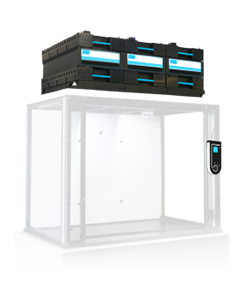
HALO restaurant air purifier mounts to the ceiling and runs through every service, pulling airborne particles, smoke, and lingering cooking odors up and away from your guests.
A full dining room is a lot of people, close together, for a couple of hours at a time, breathing air that carries everything off the kitchen line and everyone at the next table. Standard HVAC keeps the room comfortable, but it was never built to strip fine particles, smoke, and odors out of the air your guests are sitting in. HALO is an air purifier for restaurant and hospitality spaces that does, a commercial air purifier mounted overhead, out of sight, covering the whole room.


80%+ fewer fine particles in a working restaurant

HEPA and carbon, for particles, smoke, and odors

Zero floor space, no lost tables

50W, runs through every service

Used by restaurants from Italy to France to China and the USA

Real-time monitoring of your restaurant’s air quality
Get a quote within 1 business day.
Tell us about your space and a specialist will get back to you with the units, pricing, and other info you need.
The air in a full dining room
Put a room full of guests shoulder to shoulder for ninety minutes and they all breathe the same air. Add the smoke and aromas drifting off an open kitchen or a grill, the table that lingers, the door opening onto a busy street, and the dining room air becomes its own thing, separate from whatever the thermostat says.
Guests notice it before they could name it. A room that feels close, a smell that hangs around, a haze near the pass during a rush. It is the difference between a table that turns comfortably and one that empties early, and it shapes how a room reads in a review.
HVAC manages temperature and brings in fresh air, but it was never built to pull fine particles, smoke, and odors out of the dining room at the moment people are eating in it. A floor-standing purifier is no better in a restaurant, it costs you a table’s worth of space, trips up your servers, and pushes air sideways across your guests at head height. HALO works from the ceiling instead, drawing the air up and away from the room, filtering it, and sending it back clean.
How the HALO restaurant air purifier works
HALO hangs from the ceiling and connects to building power overhead. No ductwork, no HVAC changes, installed in hours, and nothing on your dining room floor.

Air is drawn up.
Room air is pulled up into the unit, lifting particles, smoke, and odors away from the tables and the people seated at them.

HEPA and carbon filtration.
HEPA H14 captures fine particles down to the grade used in laboratory biosafety cabinets, while the carbon version handles the smoke and cooking odors that drift into the dining room.
Clean air returns at the ceiling.
Filtered air rides the ceiling outward and settles back slowly, keeping the whole room turning over instead of blowing across your guests’ plates.
A Smart-Light ring shows status at a glance, and the eGuard app gives your manager remote monitoring, alerts, and filter detection. Nothing for front-of-house to think about during a rush.

Two jobs in one dining room: particles and smoke
A restaurant has two air problems, and HALO has a filter for each.
The HEPA models capture the fine particles and airborne aerosols that build up in a crowded room, the same things you want out of the air for the comfort and health of guests and staff alike. The carbon models handle the other half, the smoke off the grill and the cooking odors that drift out of the kitchen and settle into the dining room, the fryer note that clings to a banquette, the smell a guest carries home on their coat.
Run HEPA where the concern is a packed room, carbon where it is smoke and smell, or both across a larger space. Either way the filtration sits overhead and works through the entire service.
The proof at Off The Vine Tuscan Grille

80%+ fewer fine particles.
At Off the Vine Tuscan Grille, four HALO HEPA units in the dining room cut fine particles by more than 80% during peak service, confirmed by independent testing, putting the room in ISO 8 cleanroom territory.

99.99% viral reduction.
In independent ARE Labs testing, HALO cut aerosolized MS2 virus, a surrogate for influenza and SARS-CoV-2, by 99.99% within 90 minutes in a sealed chamber.

Certified to ASHRAE 241.
HALO is independently tested and certified to meet the ASHRAE 241 standard for controlling infectious aerosols in occupied buildings.
Where HALO fits in hospitality


Dining rooms
The main event. A packed room turning tables all night, with the kitchen running the whole time. HALO covers the floor from above without costing you a seat.

Bars and lounges
Crowds standing close, late hours, plenty of smoke and smell in the air. A commercial air purifier overhead keeps a busy bar breathable.

Hotel lobbies and reception
The first air a guest breathes when they walk in, and the air they pass through all day.

Event and banquet spaces
Big rooms, full capacity, long events. Several units scale to cover the space evenly.

Cafes and coffee shops
Smaller rooms where people sit and linger, and where roasting and cooking smells carry.

Private dining rooms
Closed spaces with a full table, where air turns over slowly without help.
How many units does your space need?
Coverage comes down to room volume and the air change rate you want from HALO. Each HALO HEPA unit moves about 10,590 cu ft of air per hour. Enter a room below for a quick estimate.
Cafe or coffee shop
Restaurant dining room
Bar or lounge
Banquet or event hall
Room volume
10,000 cu ft
Filtered air needed
60,000 cu ft/h
HALO HEPA units
6 units
Example estimates, at the listed ceiling heights:
| Space | Size | Volume | Target ACH (from HALO) | HALO HEPA units |
|---|---|---|---|---|
| Cafe or coffee shop (10 ft ceiling) | 600 sq ft | 6,000 cu ft | 4 | 3 units |
| Restaurant dining room (10 ft ceiling) | 1,500 sq ft | 15,000 cu ft | 4 | 6 units |
| Bar or lounge (10 ft ceiling) | 1,000 sq ft | 10,000 cu ft | 6 | 6 units |
| Banquet or event hall (12 ft ceiling) | 3,000 sq ft | 36,000 cu ft | 4 | 14 units |
A planning estimate for the filtered air HALO adds, on top of your building’s ventilation. Layout, ceiling height, and how full the room gets all affect placement, and every order includes a coverage consultation that scopes the real number.
A room guests want to eat in
Air quality is part of the experience now, whether or not a guest thinks about it in those words. A room that feels fresh is a room people linger in, order another round in, and come back to. A room that feels close or smells of last night’s fryer is one they remember for the wrong reason.
For an operator, that is the real return. A commercial air purifier overhead supports the comfort that keeps tables turning and the reputation that fills them, and you can point to it, on the wall and in your marketing, as proof you take the room seriously. Tie it into Erlab’s AirGradient monitoring and the air quality becomes something you can actually show a guest, not just claim.
What HALO costs to run
| Cost component | HALO restaurant air purifier |
|---|---|
 Electricity
|
50W per unit, about $52.60 a year each at $0.12 per kWh, running through every service. |
|
Filters
|
Folded into a roughly $0.48 a day all-in operating estimate per unit, with automatic filter detection so nothing gets missed. |
 Install
|
Hangs from the ceiling and connects to power overhead. No ductwork, no construction, no closing the dining room for a renovation. |
|
Floor space
|
None. It costs you no tables, no covers, and nothing underfoot for staff or guests. |
The roughly $0.48 a day figure is an illustrative example covering electricity and amortized filters, based on published Erlab data. Real filter intervals shift with the room and how busy it is.
The questions you will raise
| The concern | The reality | How we help |
|---|---|---|
| We already have HVAC and make-up air. | That keeps the room comfortable and brings in fresh air. It was not built to strip fine particles, smoke, and odors out of the dining room while guests are in it. HALO adds that right where they are sitting. | A walkthrough and AirGradient data show what your ventilation is and is not clearing during service. |
| We have a floor unit or a smoke eater. | A floor unit costs you a table, gets unplugged, and pushes air across your guests at head height. HALO is overhead, covers the whole room, and runs through service. | We map where overhead coverage beats a floor unit, with no lost seats. |
| Will it look bad in our dining room? | HALO mounts flush to the ceiling and stays out of sight. Nothing on the floor, no cord, no box in the corner of a room you spent money designing. | We confirm placement and sightlines before anything is ordered. |
| Will it be loud during service? | HALO runs above the room at low noise, so it stays on through the dinner rush instead of getting switched off like a floor unit next to a table. | We can share acoustic specs and arrange a visit to a working install. |
| Does it handle cooking smoke and smells? | The carbon version handles the smoke and cooking odors that drift into the dining room. It works alongside your kitchen exhaust, which handles the cookline itself. | We match HEPA, carbon, or both to whether your issue is a packed room, smoke and smell, or both. |
| What will it cost? | 50W per unit, with automatic filter detection, and no floor space given up. Covering a dining room often costs less per year than a couple of covers a week. | A running-cost estimate built around your room size and hours. |
Restaurant air purifier
frequently asked questions
The basics
Is HALO a good restaurant air purifier?
It is built for exactly this kind of room. A restaurant air purifier has to cover a full dining room, run through service without anyone tending it, stay quiet, and take up no floor space. HALO mounts overhead, runs around the clock on its own, and uses HEPA H14 for particles plus carbon for smoke and odors. In one working restaurant, independent testing measured more than 80% fewer fine particles during peak service.
Is HALO a commercial air purifier?
Yes. HALO is a commercial air purifier built for high-occupancy rooms, from restaurants and bars to hotel lobbies and event spaces. It uses commercial-grade HEPA and carbon filtration, mounts to the ceiling rather than sitting on the floor, and is designed to run continuously in a busy space.
Smoke and odors
Will it handle cooking smoke and odors in the dining room?
Yes. The carbon version is built for the smoke off a grill and the cooking odors that drift out of the kitchen and settle into the dining room. It works in the guest-facing space alongside your kitchen exhaust, which handles the cookline itself.
Does it replace our kitchen exhaust hood?
No, and it is not meant to. Your kitchen hood handles grease and combustion at the cookline. HALO handles the air in the dining room and the rest of the front of house, the particles, smoke, and odors that reach your guests. The two do different jobs.
Fit and operation
Does it take up floor space or seats?
No. HALO mounts to the ceiling, so it costs you no tables, no covers, and nothing on the floor for guests or servers to navigate. That is most of why a ceiling unit beats a floor unit in a restaurant.
How many units does a dining room need?
It depends on the room size, ceiling height, and how full it gets. As a rough guide, a 1,500 sq ft dining room needs about six HALO units, and a small cafe needs around three. A coverage consultation sets the real number for your floor plan.
Is it quiet enough to run during service?
Yes. HALO runs above the room at low noise, so there is no reason to switch it off during a rush the way a floor unit next to a table gets muted. Confirm the published acoustic figures with your Erlab specialist.
Ready to clear the air in your dining room?
Tell us about your space and we will put together a coverage plan, the right number of units, and pricing. No obligation, no sales pressure.
