



Abstract
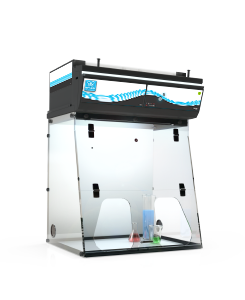
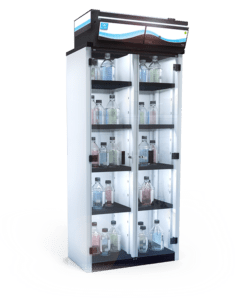
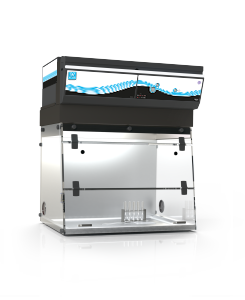
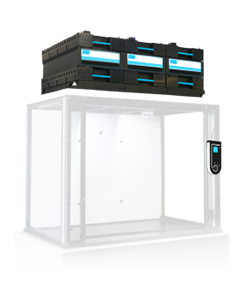
There are many considerations that must be analyzed when renovating or building a chemistry laboratory. One of the initial decisions is whether to consider using a Green Fume Hood (a filtered ductless fume hood) or to stay with a conventional ducted fume hood. Investing the time to honestly consider using a GFH can deliver a lifetime of safety and savings when compared to the ducted alternatives
Many people unknowingly and incorrectly limit the applications for Green Fume Hoods (GFH) to just those historically considered most appropriate for ductless enclosures. GFH Filtration Technology contains the most advanced molecular filtration, reliable breakthrough detection and network communications; thereby allowing it to safely replace many ducted fume hood applications.
Introduction
The GFH Selection Chart is divided into (4) major steps, these steps are specifically ordered so that you can quickly determine if a GFH is an option for your chemical fume hood application. Once an application is identified, an in-depth chemical review process will be performed to ensure that the users will be safe at all times.
Step 1
Confirm that there will be monetary savings by using GFH.
Step 2
Review the chemicals being used to make sure all will be captured and retained by GFH filtration.
Step 3
Perform the in-depth chemical review process and calculate filter life time.
Step 4
Final review and confirmation of both safety and savings.

Figure 1: Step 1 – Determine monetary savings
To properly use the GFH selection chart, follow these instructions working from the “Start Here” arrow at the top left of the chart, all the way to the final selection box of GFH or Ducted fume hoods at the bottom of the chart, whichever is ultimately most appropriate for your needs. Keep in mind that the best arrangement for your project will be a combination of both filtered and ducted fume hoods; these are not mutually exclusive solutions.
Will there be cost savings by using GFH?
In almost all cases there will be both operational and construction cost savings, whether this is a renovation project or new construction (Figure 1).
Operational cost savings
I. The largest operating cost of a laboratory is the HVAC systems that provide the correct environmental conditions. The control system must balance the airflow needs of the lab and provide enough conditioned air to satisfy the greater demand of (3) main categories:
- To satisfy minimum ventilation (fresh air) rates as required by building codes and guidelines.
- To satisfy the comfort requirements of the occupants via cooling and/or heating air.
- To provide make-up air to replenish all air exhausted by the ducted fume hoods.
As such, if the make-up air demand for the fume hoods (item 3 above) is so great that it exceeds the other two categories for at least some periods of time, then there is the potential for reducing the volume of air being delivered to the lab. That reduction in air volume is where operational cost savings will be generated. Heating, cooling, filtering, dehumidifying and delivering make-up air to the lab is very expensive (see Figure 2 below).
In North America, the typical cubic foot per minute (CFM) of fresh air costs between $6.00 and $8.50 per year in energy costs. A 6-foot wide ducted fume hood can consume between 600 and 1,250 CFM of air, depending upon sash position. This leads to a high operational cost of thousands of dollars per year per fume hood. The annual energy savings of using GFH technology provides significant operational savings even when considering the cost of replacement filters and sensors.

Figure 2: Intensive energy use for ducted fume hoods (US DOE, 2014)
II. If the laboratory is large and the number of fume hoods is low (aka “low hood density”) then the minimum ventilation rate will likely be greater than the make-up air demand for the hoods. Thus, in these cases, using ducted fume hoods is the best option as they assist with achieving the minimum ventilation rates.
Will there be construction cost savings by using GFH?
I. A ducted chemical fume hood will not function on its own. Ducted hoods require many complex and expensive HVAC systems to be installed in the building so that air is properly extracted from the hood and tempered make-up air is delivered into the laboratory.
Those systems include:
- Hood exhaust ductwork
- Hood exhaust air valve and associated hood controls
- Hood exhaust fan(s)
- Make-up Air Handler Unit (AHU) to temper and supply fresh outside air for the lab
- Supply air ductwork and insulation
- Supply air control valve(s)
- Penthouse or mechanical room space for the HVAC systems
- There are the costs associated with longer construction schedules and delayed occupancy that must be considered when using ducted hoods.
II. GFH are discrete pieces of equipment that do not require connections to complex HVAC systems. Many of the HVAC items listed above are eliminated and those remaining are downsized when using GFH technology. Smaller HVAC equipment can lead to smaller mechanical rooms and thus more assignable square footage for the building occupants. Also, the construction schedule can be shortened due to the simplicity of installing GFH.
III. Independent architects and engineers have determined that the HVAC systems required to make a ducted hood function properly cost between $20,000 and $25,000 USD for each hood. Adding the fume hood costs increases this to a total of $37,000 to $45,000 per hood (see Figure 3).
Each lab project will be unique in many ways and these costs will differ slightly from project to project. Nonetheless, there are significant HVAC system costs associated with every ducted fume hood that cannot be avoided regardless of the type of ducted hood being used (i.e. from the simple Constant Volume hood to the complex High Performance hood). All ducted hoods require these HVAC systems to make them work properly.
| Comparison First Cost NC Ducted vs. Filtered |
CV | VAV | VAV HP/LF | Filtered |
|---|---|---|---|---|
| Fume Hood, 6Ft, Vertical Sash 1,2 | $12,480 | $12,480 | $14,800 | $31,000 |
| Building Infrastructure: M-E-P, Lab Services & Data 0,3 | $24,800 | $31,000 | $31,000 | $2,480 |
| Total First Costs | $37,200 | $43,400 | $45,800 | $33,480 |
| Operating Costs Ducted vs. Filtered |
CV | VAV | VAV HP/LF | Filtered |
|---|---|---|---|---|
| Energy Costs/Year | ||||
| Exhaust Fans4 | $1,695 | $1,130 | $882 | $363 |
| Make-up Air ($5/cfm) 5 | $7,200 | $4,800 | $3,744 | $0 |
| Maintenance Costs/Year | $1,490 | $1,860 | $1,860 | $2,230 |
| Total Operating & Maintenance/Year | $10,385 | $7,790 | $6,486 | $2,593 |
Figure 3: Cost comparison – Ducted vs. Filtered Fume Hoods (Ellenzweig, et. al. 2010, adj. for 2021 costs)
IV. These cost savings apply to both new construction projects and renovation projects. Commonly, major renovation projects are replacing the HVAC systems due to their being under sized for the new programming and/or due to their age and decrepit condition. Use of GFH can avoid replacing undersized HVAC systems provided they are still functional and in acceptable condition. If replacement HVAC systems are still needed, use of GFH can allow engineers to downsize them, thereby reducing the project costs.
In addition to all the systems above, there are additional costs and challenges that must be considered during a renovation project:
- Ductwork size: adding ducted fume hoods during a renovation will require larger ductwork. The age of the building will generally indicate if there is room available for larger ductwork. Buildings constructed during the 70’s and 80’s or earlier, typically do not have the floor-to-floor height to allow increases in ductwork size.
- Reusing existing HVAC systems, even if in proper operating condition, may not be possible simply because of the higher air flow rates required to support additional ducted fume hoods.
- Existing supply and exhaust airflow control valves will likely be undersized and require replacement with larger valves. Same for the supply air ductwork and the main exhaust air trunk from the lab.
- Ducted hoods will require additional or larger capacity hood exhaust fans which in turn may require more roof top area and structural support.
V. Adding a chemistry lab to a building not originally designed to support wet chemistry presents many additional challenges:

- Boring (coring) holes for new ducts to pass through each concrete floor slab is troublesome and costly. Each slab (floor) must be X-rayed to ensure no pipes, electrical or other services are in the way. The process of cutting large holes in concrete slabs is very noisy and disruptive to all building occupants. The cooling and dust suppression water makes it a very messy process.
- Alternatively, the decision to avoid coring holes in the concrete slabs is to place ductwork on the outside of the building. This is very unsightly and the least desirable option.
- Roof structure and load capacity must be sufficient to support exhaust fan(s). Engineers will review the existing structure and recommend extra support, if necessary, to carry the additional load.
- Depending upon the type of building, there is likely a lack of proper air handling equipment to temper the amount of make-up air necessary for ducted hoods.

Figure 4: Step 2 – Chemical review
